Is Tower Records Discontinued? What Happened?

By Vanished Brands Research Desk
Fate: Tower Records filed for bankruptcy in 2004, restructured, then filed again in 2006. All US stores closed by late 2006. Some Tower-branded stores outside the US kept running under separate ownership. The Tower Records name later came back as an online store.
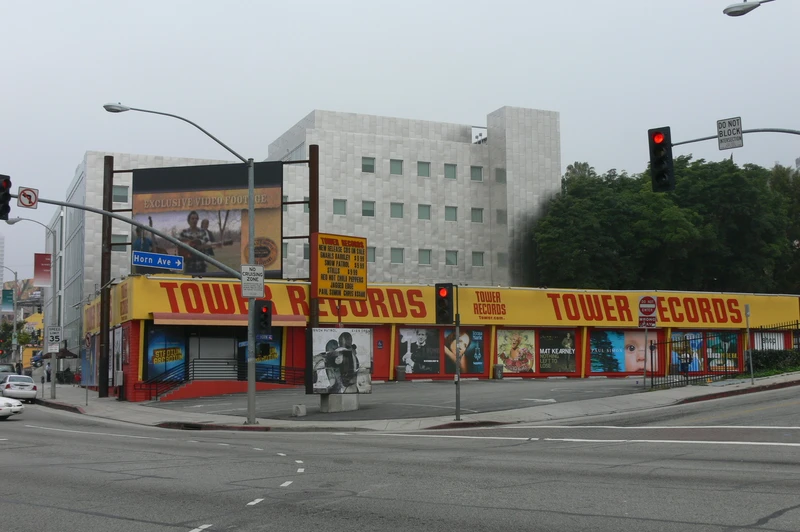
Tower Records was a chain of music stores that started in 1960 in Sacramento, California. Russ Solomon founded it after running a record section inside his father's drugstore. He opened a standalone store and eventually built it into one of the biggest music retail chains in the world.
The stores were a different experience from most record shops at the time. They carried an enormous selection of music organized by genre, country, and style. You could find imports from Japan, records on small independent labels, and deep catalog titles that mainstream stores did not bother to stock. Staff members wrote handwritten notes on cards next to albums they liked. There were listening stations where you could sample an album before buying it, a setup a lot like the one at Sam Goody down the mall. Tower was also known for its walls of music magazines — a genuinely great selection that went well beyond what most stores bothered to carry — and a general feeling that music was the whole point.
In 1971 Tower opened a store on Sunset Boulevard in West Hollywood. That location became one of the most famous record stores in the world. Artists stopped by to sign albums. Fans lined up at midnight when big new records came out. It was part store, part gathering spot for people who cared about music.
At its peak in the 1990s, Tower Records had stores across the United States and in about 15 countries. The chain competed by going deeper into music than anyone else, carrying titles that big-box stores like Best Buy and Walmart would never touch.
But the same big-box stores began discounting popular CDs at prices Tower could not match. Then Napster arrived in 1999, and suddenly millions of people were downloading music for free. iTunes launched in 2003 and let people buy single songs for 99 cents instead of full albums.
Tower Records had also borrowed a lot of money to fund its expansion, and that debt made it hard to adapt. The company filed for bankruptcy in August 2004 and tried to restructure. It filed again in August 2006 and this time there was no way out. All US stores held going-out-of-business sales and closed by the end of 2006.
Some Tower-branded stores outside the US kept going under separate ownership. The Tower Records name also came back as an online music shop. But the physical store chain that defined music retail for a generation was gone.
Timeline
-
1960
- Russ Solomon opens the first Tower Records store in Sacramento, California, expanding from a record section he ran inside his father's drugstore.
-
1971
- Tower opens its famous Sunset Boulevard store in West Hollywood. It becomes a landmark for music fans, touring artists, and midnight album release events.
-
1990s
- Tower Records reaches its peak with hundreds of stores across the US and in about 15 countries. The chain is known for carrying deep catalogs and hard-to-find music.
-
1999
- Napster launches and millions of people begin downloading music for free. CD sales start to fall across the industry.
-
2003
- Apple launches iTunes, letting people buy single songs for 99 cents. The shift away from buying full albums speeds up.
-
2004
- Tower Records files for Chapter 11 bankruptcy in August. The company tries to restructure and keep stores open.
-
2006
- Tower Records files for bankruptcy again in August. All US stores hold going-out-of-business sales and close by the end of the year.
-
2020
- Tower Records relaunches as an online retailer.
Frequently Asked Questions
What was Tower Records?
Tower Records was a music store chain founded in 1960 in Sacramento, California. Russ Solomon started it after running a record section in his father's drugstore.
Why were Tower stores so special?
They carried a huge selection of music. You could find imports, indie labels, and deep catalog albums that other stores didn't stock. Staff wrote handwritten notes recommending albums, and the stores felt built by people who loved music.
What was the famous Sunset Boulevard store?
In 1971, Tower opened a store on Sunset Boulevard in West Hollywood. It became one of the most iconic record stores in the world. Artists visited, fans lined up for midnight releases, and the store became a cultural landmark.
How big did Tower Records get?
By the 1990s, Tower had stores across the United States and in about 15 countries. It competed by offering more music than traditional big‑box stores ever would.
What caused Tower Records to decline?
Big‑box stores like Walmart and Best Buy sold popular CDs at deep discounts. Napster arrived in 1999, and millions of people downloaded music for free. iTunes launched in 2003 and let people buy single songs instead of full albums. Tower had taken on heavy debt to expand, which made it hard to adapt.
When did Tower Records file for bankruptcy?
The company filed for bankruptcy in 2004 and tried to restructure. It filed again in 2006, and this time there was no recovery. All U.S. Tower Records stores closed by the end of 2006 after going‑out‑of‑business sales.
Did Tower Records disappear completely?
Not entirely. Some international stores kept operating under separate ownership. The Tower Records name also returned as an online music shop. But the original physical chain that defined music retail is gone.
Need more music store memories? Check out Sam Goody
About Vanished Brands
Vanished Brands is a nostalgia-centric website that researches the history and archives of a wide variety of discontinued products. We develop brand content and timelines based on publicly available information. Check us out on Pinterest and Bluesky.
Explore More
Learn more
Continue on Vanished Brands
Spotted an error or have additional sources? Get in touch and we’ll review it.