Is Sam Goody Discontinued? What Happened?

By Vanished Brands Research Desk
Fate: The Musicland Group, which owned Sam Goody, filed for bankruptcy in January 2006. Most Sam Goody locations closed or were rebranded as FYE by Trans World Entertainment.
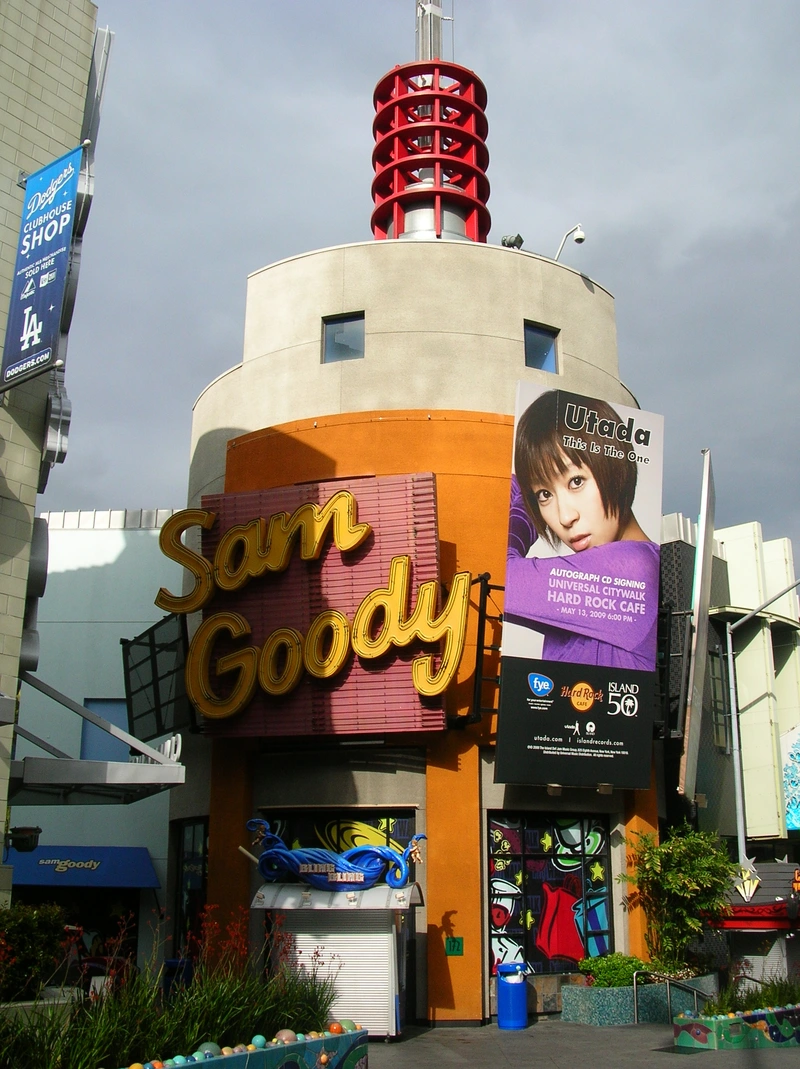
Sam Goody was a music store chain founded in New York City in 1951. It grew into one of the most familiar names in mall retail through the 1980s and 1990s, with hundreds of locations across the country selling CDs, cassettes, vinyl, and singles.
The stores had a few things that made them feel like a destination. The chart walls showed what was selling and what was climbing. New releases came in every Tuesday and got their own section near the front. Some locations kept a chalkboard near the entrance with upcoming release dates written on it, so you could see at a glance what was coming out and when. Staff tended to know their music and could point you toward something you might not have found on your own.
Listening stations let you sample an album before buying it. You could pick up a CD, put it in the station, and hear a few tracks through a pair of headphones. It was a genuinely useful way to check out music before spending money on it. The headphones were shared by every customer who came through that day, which was something you tried not to think about too hard. Still, a lot of people spent a good chunk of time at those stations before deciding what to buy.
By the early 2000s the business was under pressure from multiple directions. Walmart and Target were selling the same CDs for less. Napster and other file-sharing services let people download music for free. When iTunes launched in 2003, paid digital downloads gave people another way to buy music without going to a store at all. CD sales dropped across the whole industry and Sam Goody's mall stores, which carried large amounts of physical inventory, could not stay profitable.
Sam Goody was owned by The Musicland Group. After years of declining sales and store closures, Musicland filed for bankruptcy in January 2006. Many Sam Goody locations closed outright. Others were taken over by Trans World Entertainment and rebranded as FYE. The Sam Goody name was gone from most malls within a couple of years.
People who grew up shopping there remember the chart walls, the Tuesday release days, and the ritual of standing at a listening station deciding whether an album was worth buying.
Timeline
-
1951
- Sam Goody opens in New York City, selling records and music.
-
1978
- Sam Goody becomes part of The Musicland Group, which also operates other music retail chains.
-
2001
- December — Best Buy acquires The Musicland Group, which includes Sam Goody.
-
2003
- June — Best Buy sells Musicland back as an independent company. iTunes launches the same year, giving customers a legal way to buy music digitally.
-
2006
- January — The Musicland Group files for bankruptcy. Most Sam Goody stores close or are rebranded as FYE by Trans World Entertainment.
Frequently Asked Questions
What was Sam Goody?
Sam Goody was a music store chain founded in 1951. It became a major mall retailer in the 1980s and 1990s, selling CDs, cassettes, vinyl, and singles.
Why did people love shopping at Sam Goody?
It felt like a music destination. Stores had chart walls, new‑release sections, and chalkboards listing upcoming albums. Staff usually knew their music and could help you find something new.
What were listening stations?
They were headphone setups where you could sample a CD before buying it. You picked an album, popped it in, and listened to a few tracks. Lots of people spent time there deciding what to buy.
What made Sam Goody stand out in malls?
It had big selections, early access to new releases, and a sense of discovery. For many teens, it was the place to browse after school or on weekends.
Why did Sam Goody start to decline?
Walmart and Target sold the same CDs for less. Napster and other file‑sharing sites let people download music for free. iTunes launched in 2003 and made digital buying easy. CD sales dropped everywhere.
Who owned Sam Goody?
Sam Goody was part of The Musicland Group. As sales fell, the company struggled to stay profitable as a whole.
When did Sam Goody close?
Musicland filed for bankruptcy in January 2006. Many Sam Goody stores closed. Others were taken over by Trans World Entertainment and turned into FYE locations. The name disappeared from most malls soon after.
Does Sam Goody exist today?
Only in a very limited way. A few isolated stores or signs have popped up over the years, but the original chain is gone.
Why do people remember Sam Goody so fondly?
It represents the ritual of buying music in person — checking the charts, waiting for Tuesday releases, and standing at a listening station with shared headphones, trying to decide if an album was worth the money.
Need more music store memories? Check out Tower Records
About Vanished Brands
Vanished Brands is a nostalgia-centric website that researches the history and archives of a wide variety of discontinued products. We develop brand content and timelines based on publicly available information. Check us out on Pinterest and Bluesky.
Explore More
Learn more
Continue on Vanished Brands
Spotted an error or have additional sources? Get in touch and we’ll review it.