Is Four Loko (Original Caffeinated Formula) Discontinued? What Happened? Scandal

By Vanished Brands Research Desk
Fate: Reformulated in November 2010 after FDA warning. Caffeine, taurine, and guarana removed following nationwide ban on caffeinated alcoholic beverages
Four Loko started not in a boardroom but in a fraternity basement. Chris Hunter, Jaisen Freeman, and Jeff Wright were Kappa Sigma members at Ohio State who used to buy Thai energy drinks from a nearby Asian market and resell them to fellow students at a markup, telling people they were importing them from abroad. When they graduated in 2005 they turned that same idea into a company. They later said they were their own target market, which in hindsight explains a lot.
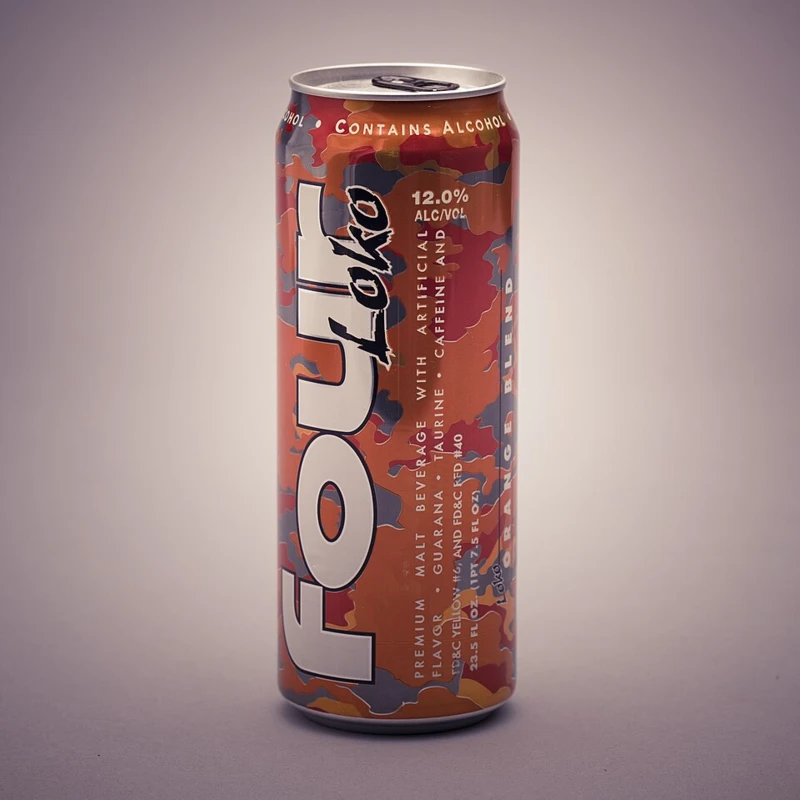
The original Four was a small 12-ounce can with 6% ABV that barely moved off shelves. In 2008 the founders made a bigger bet: a 23.5-ounce can, 12% alcohol, the now-famous camouflage print design, and a price of around two dollars and fifty cents. That version became Four Loko. A single can held as much alcohol as 4.5 standard beers — a figure the FTC later required Phusion to print directly on the label after a 2011 settlement over deceptive packaging. The can also contained 156mg of caffeine, close to a strong cup of coffee. The combination was the problem. Caffeine does not lower your blood alcohol level but it does reduce how drunk you feel, so people kept drinking well past the point where their body would normally tell them to stop.
The drink also had an early ingredient that most people forget about. The original formula included wormwood extract, the same botanical used in absinthe. It was dropped in 2008 partly because it tasted bad. When wormwood left the recipe, alcohol became the fourth core ingredient, which is why the name Four Loko stuck.
The name itself came from the four main ingredients and what the founders described as a crazy blend of flavors. The word Loko is Spanish slang for crazy. The camouflage can design was introduced in 2008 alongside the reformulation and became one of the most recognizable pieces of packaging in convenience store history, which is not a compliment the brand probably deserved.
By 2010 the brand was making roughly 60 million cans a year and generating an estimated 150 million dollars in revenue. That growth brought the scrutiny that would end the original formula. In September 2010, 23 students were hospitalized at Ramapo College in New Jersey after drinking Four Loko. Then on October 9, 2010, nine freshmen at Central Washington University ended up in hospitals in Ellensburg and Yakima after a party in Roslyn, Washington. Their blood alcohol levels ranged from 0.12 to 0.35. A level of 0.30 is considered potentially fatal. One female student nearly died. Police initially suspected date rape drugs because the scale of impairment seemed impossible from alcohol alone. Toxicology later showed no drugs, only alcohol.
Washington State moved to ban Four Loko shortly after. Michigan, Utah, and Oklahoma followed. On November 16, 2010, Phusion Projects announced it would remove all stimulants from the recipe. The FDA issued formal warning letters the next day, declaring that added caffeine in alcoholic beverages was an unsafe food additive under the Federal Food, Drug, and Cosmetic Act. Three other companies received the same letters: Charge Beverages, New Century Brewing, and United Brands.
What happened to the remaining stock is one of the stranger parts of the story. Rather than destroying it, wholesalers shipped millions of cases to MXI Environmental Services in Abingdon, Virginia, one of only three facilities in the country equipped to convert products with extractable alcohol into ethanol fuel. Hundreds of trucks arrived carrying 2,000 cases each. MXI was processing four truckloads a day at full capacity. The alcohol was distilled out and sold to be blended into gasoline. The aluminum cans were recycled separately. MXI estimated the entire cycle took about 30 days before a Four Loko can returned to circulation as a different beer can.
At the same time a black market formed for the original formula. NBC New York reported in January 2011 that original Four Loko was one of the hottest products on Craigslist. Reporters bought a case of 12 cans for 80 dollars, nearly three times the retail price. Sellers described the cans as collectibles not intended for drinking.
The reformulated version launched in January 2011 without caffeine, taurine, or guarana. In 2011 the FTC reached a settlement with Phusion requiring the label to state the exact beer equivalent on every can. The brand kept going and in ways nobody expected. In 2021 Phusion launched Four Loko Records, a music label. The company has also run campaigns promoting STD testing. Four Loko still sells today across 49 states and 21 countries, at alcohol levels ranging from 6% to 14% depending on where you buy it. The caffeinated version that caused a federal regulatory crisis lasted roughly two years on shelves. The company it launched is still running.
Timeline
-
2005
- Four Loko introduced by Phusion Projects
-
2008
- Rapid growth on college campuses makes Four Loko a party drink phenomenon
-
2009
- First wave of hospitalizations and emergency room visits linked to Four Loko; group of state attorneys general ask FDA to review safety
- November — FDA sends first inquiry to Phusion Projects requesting safety data on adding caffeine to alcoholic beverages
-
2010
- September — 23 students hospitalized at Ramapo College, New Jersey after drinking Four Loko; college president bans the drink on campus
- October 9 — Nine freshmen hospitalized at CEntral Washington University after Four Loko party, spurring Washington and other states to ban the drink
- November 16 — Phusion Project announces reformulation and removes all stimulants, forcing retailers to pull remaining stock
- November 17 — FDA issues formal warning letters to Phusion Projects and three other manufacturers, declaring added caffeine in alcoholic beverages an 'unsafe food additive' under the Federal Food, Drug, and Cosmetic Act
- December — Reformulated Four Loko begins appearing on shelves and retailers pull remaining original-formula stock
-
2011
- January — Reformulated Four Loko fully distributed nationwide; original caffeinated formula gone from mainstream retail
Frequently Asked Questions
Why was Four Loko banned?
The original Four Loko was banned because the FDA declared caffeine an unsafe food additive when combined with alcohol. After nine students were hospitalized at Central Washington University in October 2010, states began banning it and the FDA issued formal warning letters in November 2010, forcing reformulation.
How much caffeine was in the original Four Loko?
Original Four Loko contained approximately 156mg of caffeine per 23.5 oz can — equivalent to about 4-5 cups of coffee — combined with 12% alcohol by volume. It also contained taurine and guarana.
What states banned Four Loko?
Washington State was first to ban Four Loko in October 2010, followed by Michigan, Utah, and Oklahoma. The FDA's November 2010 warning effectively made the original caffeinated formula untenable nationwide.
Is Four Loko still sold today?
Yes, a reformulated Four Loko is still sold, but it no longer contains caffeine, taurine, or guarana. The current version retains the 12% ABV and brand name but is essentially just a flavored malt beverage.
Did people die from Four Loko?
Several deaths were linked to the original caffeinated formula, though direct causation was debated. The most prominent incident involved nine hospitalizations at Central Washington University in 2010, which accelerated the federal crackdown.
When did Four Loko remove caffeine?
Four Loko removed caffeine in late 2010 after the FDA warned that caffeine added to alcoholic beverages was unsafe. The company reformulated the drink in November 2010, removing caffeine, taurine, and guarana.
When did Four Loko change the recipe?
Four Loko changed its recipe in November 2010 after federal and state pressure over the risks of combining alcohol and stimulants. The reformulated version no longer included caffeine, taurine, or guarana.
Where was Four Loko banned?
Before the national reformulation, Four Loko was banned or restricted in several states, including Washington, Michigan, Utah, and Oklahoma. Some colleges and local jurisdictions also prohibited its sale or possession.
Is Four Loko illegal?
Four Loko is not illegal today in its current reformulated form. The original caffeinated version was effectively banned in 2010, but the modern non-caffeinated version remains legal in many places, subject to local alcohol laws.
Why was Four Loko so controversial?
Four Loko became controversial because it combined high alcohol content with caffeine and other stimulants, which could mask intoxication and encourage dangerous binge drinking. Its popularity among young drinkers and several high-profile hospitalizations drew national attention.
Looking for more tipsy sips? Check out Cisco Fortified Wine
About Vanished Brands
Vanished Brands is a nostalgia-centric website that researches the history and archives of a wide variety of discontinued products. We develop brand content and timelines based on publicly available information. Check us out on Pinterest and Bluesky.
Explore More
Learn more
Continue on Vanished Brands
Spotted an error or have additional sources? Get in touch and we’ll review it.