Is Borders Discontinued? What Happened?

By Vanished Brands Research Desk
Fate: Capture 11 bankruptcy in February 2011, followed by liquidation and closure of all stores later that year
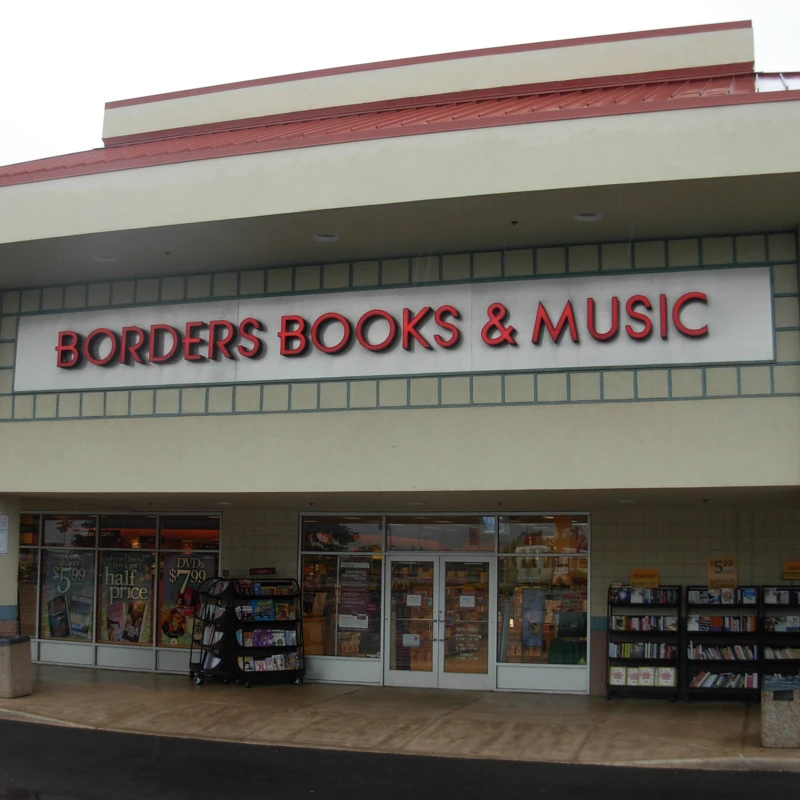
Borders grew from a 1971 bookstore in Ann Arbor, Michigan, into a national chain that defined the big-box bookstore era—cafes, events, and good reads unde one roof. The company expanded rapidly through the 1990s after Kmart acquired Borders and merged it with Waldenbooks, then spun it out as Borders Group. Superstores flourished alongside music and DVD sales, while knowledgeable staff and author appearances built local followings.
But the industry shifted. Borders outsourced its early online store to Amazon, ceding hard-won customer relationships at the dawn of e-commerce. Digital reading rose quickly, yet Borders’ own e-book strategy and device partnerships arrived late, while long leases and big footprints limited flexibility.
Borders filed Chapter 11 in 2011, closing hundreds of locations. Efforts to reorganize or find a buyer fell short, leading to liquidation and the final closure of U.S. stores later that year. For many readers, Borders remains a memory of sprawling stacks, café tables, and discovering a new author on a rainy afternoon.
Timeline
-
1971
- January — Borders founded in Ann Arbor, Michigan by Tom and Louis Borders.
-
1992
- October — Kmart acquires Borders; portfolio aligned with Waldenbooks ahead of superstore expansion.
-
1995
- May — Borders Group spun off/IPO; rapid growth of big-box bookstores across the U.S.
-
1998
- May — Borders.com is established as the company's online retail presence.
-
2001
- January — Borders.com operations outsourced to Amazon.
-
2008
- January — Borders ends relationship with Amazon and relaunches its own site
-
2011
- February 16 — Company files for Chapter 11 after a buyer cannot be secured and closes all remaining stores
Frequently Asked Questions
What was Borders?
Borders was a national bookstore chain that grew from a single Ann Arbor shop in 1971 into a major big‑box retailer known for books, music, cafés, and author events.
What made Borders popular?
Readers loved its large stores, deep selection, comfy café seating, and staff who recommended new authors. It became a go‑to place for browsing, studying, and hanging out.
When did Borders close?
Borders filed for Chapter 11 in 2011. After failing to find a buyer, the company liquidated and closed all U.S. stores later that year.
Why did Borders decline?
It outsourced its early online store to Amazon, arrived late to e‑books, and struggled with long leases and big footprints. Competition from digital reading and online shopping accelerated the decline.
Where were Borders stores located?
Borders operated hundreds of superstores across the United States, often in busy shopping centers and near malls.
How is Borders remembered today?
People remember it for its sprawling book aisles, café tables, staff picks, and the joy of discovering a new read on a rainy afternoon.
Want more retail relics? Check out American Apparel and Circuit City
About Vanished Brands
Vanished Brands is a nostalgia-centric website that researches the history and archives of a wide variety of discontinued products. We develop brand content and timelines based on publicly available information. Check us out on Pinterest and Bluesky.
Explore More
Learn more
Continue on Vanished Brands
Spotted an error or have additional sources? Get in touch and we’ll review it.