Is Circuit City Discontinued? What Happened?

By Vanished Brands Research Desk
Fate: Liquidation of all U.S. retail stores in early 2009 following a Chapter 11 filing until later resurfaced online under new owners.
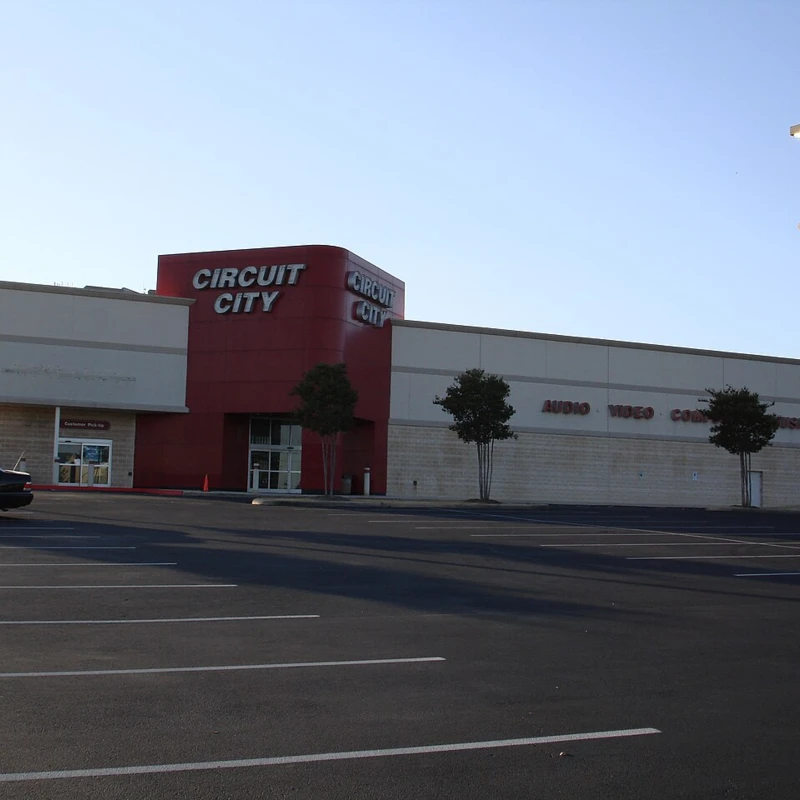
Circuit City - originally called Wards Company - grew from humble roots in Richmond, Virginia in 1949 into one of America's best-known big-box electronics chains. As the brand became mainstream in later years, its red-trimmed superstores and circular drive-thru pickup lanes were weekend staples for TVs, VCRs, car audio, and PCs. The company experimented with other ventures like DIVX, a limited DVD service with narrow movie offerings and expensive players that became a financial burden for the company - lasting one year befor shuttering in 1998. CarMax, an auto superstore with no-haggle pricing, was spun off as a separate enterprise in 2002. Circuit City also introduced Firedog was a service offering bringing in-home services to consumers that folded after the store's liquidation in 2009.
Circuit City’s attempt at starting its own pay-per-view movie service entailed proprietary set-top players and disposable DiVX movie discs that expired 48 hours after you started watching them. The player required a phone line so it could check whether you had permission to watch. But as it turned out, consumers preferred their DVDs without strings, and Circuit City ended up dropping $114 million on its little experiment.
The company also benefited from the home-theater boom, yet retail dynamics shifted. Best Buy’s low-pressure showrooming, Walmart’s pricing power, and e-commerce eroded Circuit City’s advantages.
Strategic missteps compounded the pressure. Store locations left gaps in prime areas, and appliance exits reduced foot traffic. As a result, the chain laid off approximately 3,400 sales associates to cut costs. The move saved payroll, but service and conversion took a hit.
The final blow came with the 2008 financial crisis, which crushed demand for discretionary electronics purchases and tightened vendor credit. Circuit City was forced to file Chapter 11 in November 2008. Efforts to reorganize or find a buyer fell short. In January 2009, the company liquidated, closing all stores two months later.
The Circuit City name later reappeared online under different ownership, a reminder of the brand’s recognition even after its brick-and-mortar exit. Its rise and fall trace the arc of U.S. electronics retail—from commission sales floors to Sunday inserts to price transparency, all with a premium on convenience on convenience.
Timeline
-
1949
- January — Company founded in Richmond, Virginia as Wards Company, selling consumer electronics and appliances.
-
1984
- January — Adopts the Circuit City brand and scales the superstore format nationwide.
-
1993
- January — CarMax opens as a side business of Circuit City Corporation before being spun off as a successful separate business nearly 10 years later.
-
1998
- January — Company launches DIVX pay-per-view movie service that is discontinued one year later, posting a $114 million loss.
-
2005
- March 28 — Circuit City introduces Firedog - an in-home, in-store, and online service - in response to Best Buy's Geek Squad.
-
2007
- March 28 — Announces layoffs of ~3,400 higher-paid sales associates to reduce costs, drawing criticism over service quality.
-
2008
- November 10 — Files for Chapter 11 bankruptcy protection amid sales declines and constrained vendor credit.
-
2009
- March 8 — Final U.S. stores close following a January 2009 liquidation announcement, with all assets and brand sold.
Frequently Asked Questions
What was Circuit City?
Circuit City was a major U.S. electronics retailer that began in 1949 in Richmond, Virginia. Its red‑trimmed superstores became weekend stops for TVs, VCRs, computers, and car audio.
What made Circuit City popular?
Shoppers liked its big selection, drive‑thru pickup lanes, and knowledgeable sales staff. The chain grew during the home‑theater boom and became a top destination for electronics.
What was DIVX, and why did it fail?
DIVX was Circuit City's short‑lived pay‑per‑view DVD system. It required special players and discs that expired after 48 hours. Customers rejected the restrictions, and the company lost over $100 million on the project.
What other ventures did Circuit City try?
It launched CarMax, which later became a separate company, and introduced Firedog for in‑home tech services. CarMax continues to thrive today, but Firedog ended after the chain liquidated in 2009.
Why did Circuit City decline?
Competition from Best Buy, Walmart, and online retailers eroded its advantages. Exiting appliances reduced traffic, and store locations left gaps in key markets. A major layoff of 3,400 experienced salespeople hurt service and sales.
When did Circuit City close?
The company filed for Chapter 11 in November 2008. After failing to reorganize or find a buyer, it liquidated in early 2009 and closed all stores.
Did Circuit City ever return?
The name later reappeared online under new ownership, but the original brick‑and‑mortar chain is gone.
How is Circuit City remembered today?
People remember it for its red stores, Sunday ads, drive‑thru pickup lanes, and the era of big‑box electronics shopping before e‑commerce took over.
Want to learn about more retail relics? Check out Blockbuster Video , Borders , Casual Corner and Fry's Electronics
About Vanished Brands
Vanished Brands is a nostalgia-centric website that researches the history and archives of a wide variety of discontinued products. We develop brand content and timelines based on publicly available information. Check us out on Pinterest and Bluesky.
Explore More
Learn more
Continue on Vanished Brands
Spotted an error or have additional sources? Get in touch and we’ll review it.