Is Wet Seal Discontinued? What Happened?

By Vanished Brands Research Desk
Fate: Wet Seal filed for bankruptcy in January 2015 and closed hundreds of stores. It filed again in 2017 and shut down every remaining location. The brand name was sold and used for an online shop for a while after that, but the mall chain was gone.
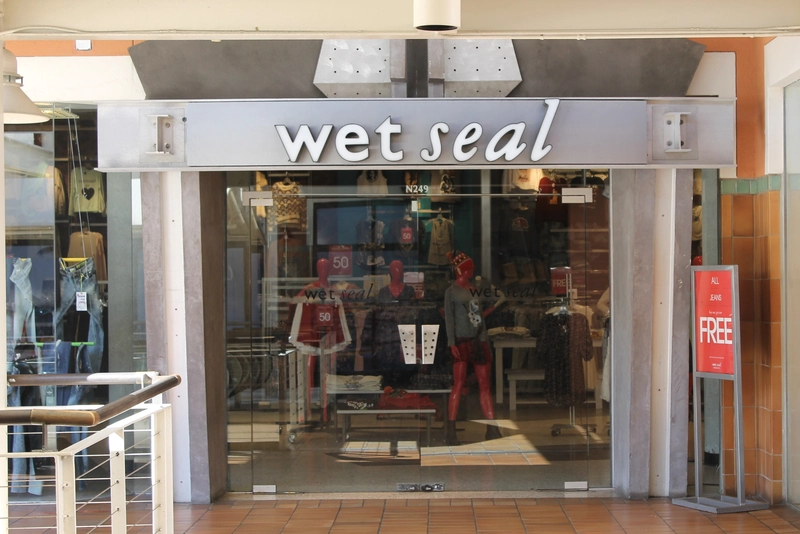
Wet Seal was a clothing store for teenage girls and young women. It started in 1962 in Newport Beach, California as a small shop that sold surfing and beach clothes. Over time it shifted to selling affordable trendy clothing and started opening locations in shopping malls.
By the 1990s Wet Seal stores were showing up in malls all over the country. In 1995 the company bought a chain called Contempo Casuals from Neiman Marcus. That deal came with about 239 stores. A lot of those locations became Wet Seal stores. Some of them were turned into a separate chain called Arden B, which sold dressier clothes for a slightly older crowd.
By 2010 Wet Seal had more than 500 stores across 47 states. It was one of the bigger teen clothing chains in the country. The stores sold the kind of affordable, on-trend stuff that a teenager could pick up with birthday money.
Things started going wrong in the early 2010s. Fewer people were shopping at malls. Online stores were pulling customers away. Bigger chains like Forever 21, H&M, and Zara were selling similar clothes but had more money and more stores. Wet Seal had a hard time keeping up.
In January 2015 the company said it was closing hundreds of stores and letting thousands of workers go. It filed for bankruptcy protection that same month. It tried to keep going on a smaller scale but could not turn things around. In 2017 it filed for bankruptcy again and closed every store that was still open.
The Wet Seal name was sold to a company called Gordon Brothers. The name showed up on an online store for a while after that. But the mall chain that teenagers knew from the 1990s and 2000s was gone.
Timeline
-
1962
- A small surf and beach wear shop opens in Newport Beach, California. It is the starting point for what will become Wet Seal.
-
1990
- The company officially takes the Wet Seal name after shifting away from surf gear and into general teen fashion.
-
1995
- Wet Seal buys Contempo Casuals from Neiman Marcus, picking up about 239 stores at once. Many locations are turned into Wet Seal or Arden B stores.
-
2000s
- Wet Seal becomes a familiar mall store for teenage girls. Arden B runs alongside it, selling dressier clothes to a slightly older crowd.
-
2010
- Wet Seal is running more than 500 stores across 47 states, Puerto Rico, and Washington D.C.
-
2010s
- Mall traffic drops, online shopping grows, and bigger fast-fashion chains pull customers away. Wet Seal starts struggling to stay profitable.
-
2015
- Wet Seal announces it is closing hundreds of stores and laying off thousands of workers in January. It files for bankruptcy protection the same month and tries to keep going on a smaller scale.
-
2017
- Wet Seal announces it is closing all remaining stores in January after failing to find new financing. It files for bankruptcy again in February. Gordon Brothers buys the brand name in March.
- onward — The Wet Seal name gets used for an online-only store under new ownership. The original mall chain is gone.
Frequently Asked Questions
What happened to Wet Seal?
Wet Seal filed for bankruptcy in January 2015 and closed hundreds of stores. It filed again in 2017 and shut down every remaining location. The brand name was sold and used for an online shop for a while, but the original mall chain closed for good.
Why did Wet Seal fail?
Wet Seal was hurt by a mix of fewer mall shoppers, more competition from bigger chains like Forever 21, H&M, and Zara, and the shift to online shopping. The combination made it very hard to stay profitable.
Was Wet Seal always a mall store?
The brand started as a California surf and beach wear shop in 1962. It grew into a national mall chain over the following decades, especially after buying Contempo Casuals from Neiman Marcus in 1995.
Why is the Contempo Casuals purchase important?
Buying Contempo Casuals in 1995 gave Wet Seal about 239 stores all at once and pushed it into a much bigger national presence. Many of those stores became Wet Seal or Arden B locations and helped define the chain's mall footprint.
Did Wet Seal own Arden B?
Yes. Wet Seal ran Arden B as a separate chain aimed at a slightly older shopper. In company filings, Wet Seal and Arden B were described as two separate mall-based retail concepts.
Did mall decline cause Wet Seal to fail?
Mall decline was a big part of it. Wet Seal was also competing against better-funded rivals in a crowded market. Fewer mall shoppers combined with stronger competition made it very hard for the chain to stay profitable.
Is Wet Seal still around today?
The original store chain closed in 2017. The Wet Seal name was sold and used for an online shop for a time after that, but the national mall chain people remember is gone.
About Vanished Brands
Vanished Brands is a nostalgia-centric website that researches the history and archives of a wide variety of discontinued products. We develop brand content and timelines based on publicly available information. Check us out on Pinterest and Bluesky.
Learn more
Continue on Vanished Brands
Spotted an error or have additional sources? Get in touch and we’ll review it.