What Happened to Palm Pilot? The PDA That Almost Beat the iPhone
Palm Pilot sold 50M+ units and had 70% PDA market share. Then the iPhone launched. Here's how the company that invented pocket touchscreens lost everything.

By Vanished Brands Research Desk
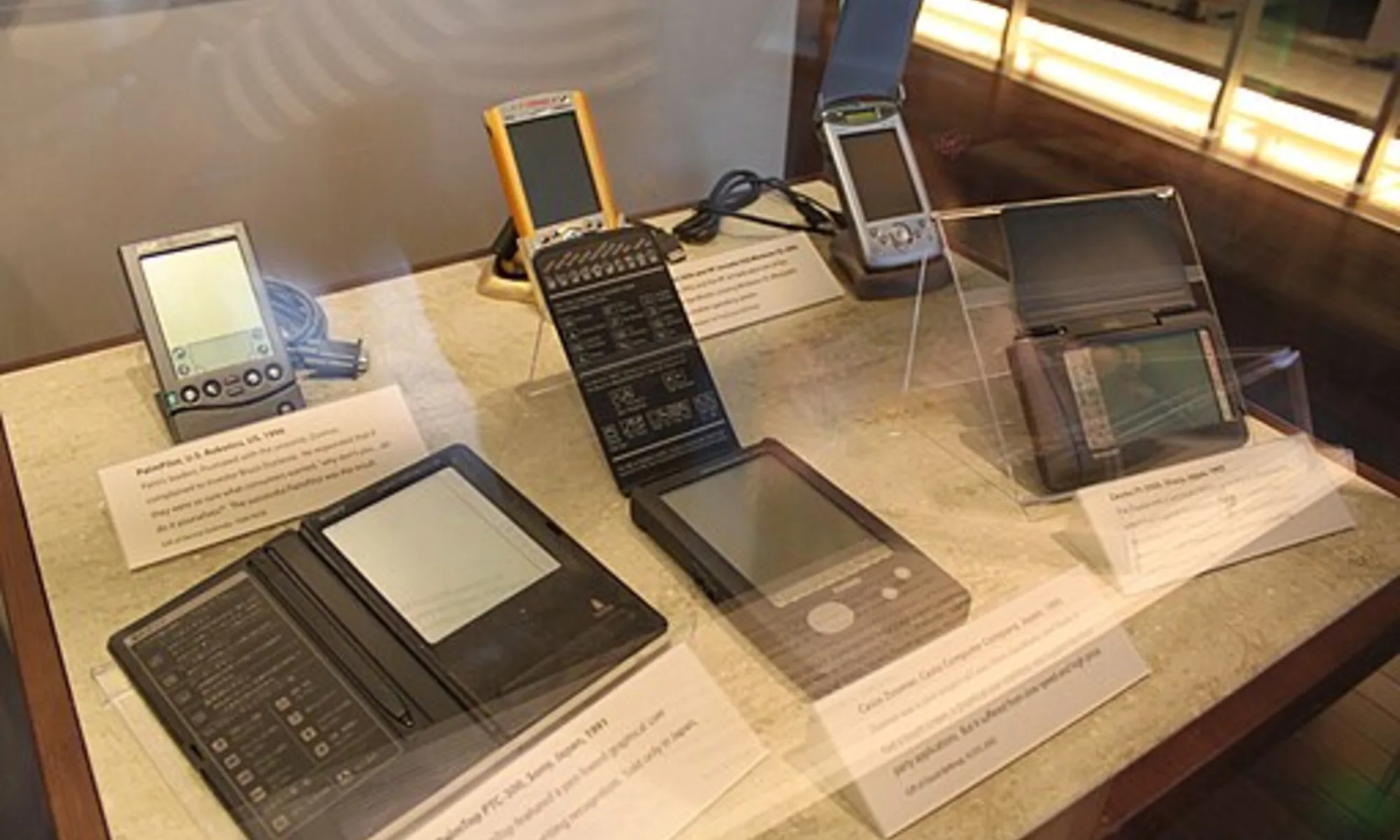
TL;DR: Palm Pilot dominated handheld computing from 1996–2007, with 50M+ devices and ~70% PDA market share. It fell by prioritizing PDAs over phones and moving too slowly against the iPhone. Palm’s 2009 webOS was genuinely brilliant but arrived two years late. HP bought Palm in 2010 and shut down the hardware business in 2011.
Jump to
- What was the first Palm Pilot?
- Why Palm dominated the 90s
- What killed Palm Pilot
- Where to buy Palm Pilot today
Opening Hook
TL;DR: Palm Pilot ruled handhelds from 1996 to 2007, selling over 50 million devices and reaching about 70% market share. It fell by prioritizing PDAs over phones and moving too slowly against the iPhone. webOS launched in 2009 was genuinely brilliant but arrived two years late. HP bought Palm in 2010 and shut down the hardware business in 2011.
In 1996, if you were important, or wanted to look important, you had a Palm Pilot on your belt. More than a gadget, it was the first pocket device that made contacts and notes truly useful on the go. Palm users pressed one HotSync button and their whole life stayed in lockstep.
By 2000, Palm held roughly 70% of the PDA market and was valued higher than General Motors. Then in 2007, Steve Jobs unveiled the iPhone, and the standalone PDA became a museum piece almost overnight.
So what happened? How did the company that popularized pocket touchscreens get outpaced by a touchscreen phone?
What Was the Palm Pilot?
The 1996 Device That Changed Everything
The first Palm Pilot launched in April 1996 from Palm Computing, later acquired by 3Com. It was a genuinely new kind of device.
Original Palm Pilot specs from 1996:
- Monochrome touchscreen at 160 by 160 pixels
- 128KB to 512KB memory
- Stylus-based input
- Price: $299 to $499
- Fits in a shirt pocket
It fit in a pocket when rivals were bulky. It turned on instantly with no boot time. It ran for a week on a couple of AAA batteries. The features stayed focused and simple.
The killer feature was HotSync. Place the Palm in a cradle, press one button, and your calendar, contacts, and notes sync instantly. Before Palm, you entered data twice, once on the computer and once in a paper planner. HotSync ended that.
Executives used them as digital Rolodexes. Doctors kept patient notes and drug references on hand. Sales professionals tracked clients and orders. Lawyers managed case notes and deadlines. Tech enthusiasts snapped them up early.
Culturally, having a Palm Pilot clipped to your belt was like carrying the latest iPhone today, a status symbol that said you were tech-savvy and organized.
Over 50 million Palm devices were sold worldwide.
The Original Palm Pilot Models, 1996 to 1999
First generation, 1996 to 1997
3Com Palm Pilot 1000 and 5000, April 1996:
- First commercially successful PDA
- 128KB or 512KB memory depending on the model
- TCP/IP networking capabilities
- Price: $299 for the 1000 or $369 for the 5000
- Around 1 million units sold in the first 18 months, a record at the time
Palm initially called it just “Pilot,” but Pilot Pen Corporation sued. The name became PalmPilot and later Palm Pilot.
IBM WorkPad, 1997:
- IBM’s rebrand of the Palm Pilot
- Same specs, different logo
- Aimed at business buyers
Second generation, 1998
Palm III, March 1998:
- Infrared port for beaming contacts and apps to other Palms
- Better screen contrast
- More memory: 2MB
- Iconic rounded design
- Price: around $369
Beaming business cards via infrared became the cool way to exchange contact info at conferences.
Third generation, 1999
Palm V, February 1999:
- Sleek aluminum case
- Ultra-thin at 0.4 inches
- Rechargeable battery
- Price: around $449
The Palm V was the iPhone of its era. It showed up in fashion magazines, not just tech reviews. It proved PDAs could be stylish, not merely functional.
The Golden Age: When Palm Dominated, 1997 to 2003
Key numbers at a glance
Palm reached roughly 70% PDA market share by 1999. The original models sold around 1 million units in the first 18 months. By 2000, that figure had grown past 5 million. Competitors like Handspring and Sony licensed Palm OS to build their own devices. In March 2000, the Palm IPO valued the company at around $95 billion, bigger than GM at the time.
Why everyone wanted one in the 90s
The simplest answer is that it just worked. It turned on instantly. The interface stayed out of the way. HotSync was rock solid. And the battery lasted a week on everyday batteries.
Graffiti, Palm’s handwriting recognition system, was a big part of the appeal. You wrote single-stroke letters in a small input area, and it took about 15 minutes to learn. Letters went in the left side, numbers on the right. It felt faster than writing by hand once you got used to it.
Palm also had a real app ecosystem before the phrase “App Store” even existed. Productivity tools like Documents To Go and Quickoffice handled office files. Games like Bejeweled and Tetris filled downtime. Palm Reader brought books. AvantGo let you download web pages for offline reading.
Professional use cases
Doctors kept drug references and patient notes on hand. Real estate agents managed listings, client info, and appointments. Lawyers tracked case notes and deadlines. Sales teams ran customer databases and logged expenses.
“The Palm Pilot replaced my 3-inch Day Planner and Rolodex. My briefcase got 5 pounds lighter.” — Typical 1998 user
Cultural impact
Palm Pilots showed up constantly in TV shows and movies as a shorthand for someone being tech-forward. SNL did sketches about Palm addiction. People started calling it “Palm Pilot syndrome” when users kept checking their device compulsively, which was early smartphone behavior before smartphones existed.
The plateau, 2000 to 2003
Sales were still strong, but competition from Windows Mobile and BlackBerry was growing. Phones were getting smarter and people started wondering if they really needed two devices. BlackBerry’s push email made it a must-have in business. Palm kept updating its lineup, but not fast enough for what was coming.
The Expansion: Different Palm Brands, 1999 to 2005
Why were there so many “Palm” devices?
Palm licensed Palm OS to other companies, which grew the ecosystem but also fragmented it.
The main players
Handspring, 1998 to 2003
Handspring was founded by Jeff Hawkins and Donna Dubinsky, the original creators behind Palm. Their signature devices were the Visor and the Treo. The Visor stood out with its Springboard expansion slot, which let you snap in add-ons like GPS modules or modems. The Treo arrived in 2002 as an early smartphone contender, though it was priced high and aimed at a fairly narrow audience.
Sony CLIE, 2000 to 2005
Sony’s CLIE line pushed Palm OS into higher-end territory with better displays, multimedia features, and premium design. They were expensive, and Sony exited the market in 2005.
Palm’s own product lines
m series, 2001 to 2003
The m500 and m505 brought color screens, while the m130 served as a budget option. All supported SD and MMC card expansion.
Tungsten series, 2002 to 2006
The Tungsten line was Palm’s higher-end tier: faster CPUs, better screens, and Bluetooth. The Tungsten T5, released in 2004, is often cited as the last truly great PDA.
Zire series, 2002 to 2005
The Zire was built for first-time buyers, priced between $99 and $199. It brought a lot of new people into the PDA world.
The corporate tangle, 2000 to 2005
Split, 2000
Palm divided into two companies: PalmOne handled hardware, and PalmSource owned the Palm OS software. The problem was that PalmSource licensed the OS to Sony and Handspring, while PalmOne was out there competing against those same companies.
Merge, 2003
Handspring and PalmOne reunited the original founders and brought the Treo line back under one roof. By that point, though, the market was already shifting toward phones.
Rebrand, 2005
The company went back to Palm, Inc. to simplify. But the years of brand confusion and lost time had already taken a toll.
The Beginning of the End: Palm’s Fatal Mistakes, 2003 to 2007
Mistake 1: Dismissing the phone threat
Between 2002 and 2006, the signs were hard to miss. BlackBerry was taking over business with push email and a hardware keyboard. Users wanted everything in one device. Windows Mobile phones were improving fast.
Palm launched the Treo but treated it like a PDA that makes calls rather than a phone-first product. Pricing was high and the hardware felt clunky against BlackBerry. The internal mindset was something like “we do PDAs, phones are someone else’s business.” Phones absorbed PDAs. Palm ceded the future.
Mistake 2: Letting Palm OS go obsolete
By 2005, Palm OS was showing its age. It was built for simple 1996 PDAs, limited to running one app at a time, slow on the web, thin on multimedia, and leaking developers to other platforms. The interface looked dated next to rivals.
Windows Mobile, meanwhile, offered multitasking, Office integration, and features IT departments wanted.
Palm worked on Palm OS 6, internally called Cobalt, but never shipped it. They eventually put Windows Mobile on some Treo models, which was a quiet admission that their in-house OS had fallen behind.
Mistake 3: Corporate chaos
From 2001 to 2005, Palm went through about five CEOs, each with a different strategy. The 2000 split into PalmOne for hardware and PalmSource for software created internal misalignment. A 2003 merge with Handspring was followed by a 2005 rebrand back to Palm, Inc. Founders including Jeff Hawkins eventually left, and talent followed them out. Strategy changed faster than products could ship.
Mistake 4: Underestimating the iPhone
In January 2007, the iPhone was unveiled. Palm leadership publicly doubted that “PC guys” could figure out phones.
Palm bet that users still needed physical keyboards. They underestimated capacitive touch and what a real mobile browser meant. They missed how significant the coming App Store ecosystem would be.
The iPhone launched in June 2007 and redefined what a smartphone could be. The Treo looked instantly dated. Palm’s market share slid from around 10% in 2006 to under 1% by 2010.
Mistake 5: Moving too slowly
Apple’s pace during this stretch was relentless. The iPhone came in 2007, the iPhone 3G and App Store in 2008, and the iPhone 3GS in 2009.
Palm’s response was the Treo 755p in 2007, which felt like a 2004 design. The Treo Pro arrived in 2008 as a minor catch-up. The Palm Pre finally arrived in 2009 and was genuinely modern, but it was two years too late.
By the time Palm had a real answer, Apple was three generations ahead.
The Desperation Phase: Palm Pre and webOS, 2008 to 2010
Palm’s last hope: webOS, CES 2009
Press reaction was “iPhone killer.” For a moment, it looked plausible.
What webOS got right:
- Multitasking Cards: see all open apps at once, swipe one away to close it
- Gesture navigation: swipe up from the bottom of the screen, no physical home button needed
- Synergy: merged Google, Facebook, and Exchange into one address book automatically
- Universal Search: start typing and it searched apps, contacts, and the web at once
- Notifications: subtle and actionable, genuinely better than iPhone’s at the time
webOS was genuinely good. Several of its ideas later appeared in iOS.
The Palm Pre, launched June 6, 2009
Specs: 3.1 inch display at 320 by 480 pixels, slide-out physical keyboard, 8GB storage, 3MP camera, Sprint exclusive at $199 on contract
Design notes: Pebble-like shell, smooth slider mechanism, keyboard aimed at BlackBerry switchers.
How reviewers saw it at launch:
- Best multitasking of any phone at the time
- Gesture navigation widely praised as brilliant
- webOS called beautiful
- Build quality described as shaky
- Slider mechanism felt flimsy
- App selection was thin
Why the Pre struggled despite webOS
1) Too late to the party
iPhone launched in June 2007. By the time the Pre arrived in June 2009, that was about 24 months behind. The App Store had launched in 2008 and Apple already had over 50,000 apps and 50 million devices by mid-2009. Developer momentum was locked in. The Pre launched with around 30 apps, and developers weren’t rushing to build more.
2) Sprint exclusivity
Being Sprint-only limited the audience at a time when Sprint was losing subscribers to AT&T and Verizon. When the Pre finally reached Verizon in January 2010, the window had already closed. Verizon pushed Android instead.
3) Hardware issues
The slider was prone to wobble, a quirk users nicknamed the “Oreo effect.” The Touchstone wireless charger was clever but felt like a bonus feature when the core hardware felt less polished than the competition.
4) The app gap
Developers were prioritizing iOS and increasingly Android. Many popular apps never came to webOS, which pushed users to platforms that had them.
5) Misfired marketing
The “Creepy Girl” ad campaign confused buyers rather than winning them over. Palm’s messaging couldn’t compete with Apple’s clarity.
The numbers
In its first year, Palm had targeted around 2 million units. They sold closer to 1 million. Losses hit approximately $740 million. In the second year, sales collapsed further. The stock slid from around $18 down to $3. Layoffs accelerated. Palm was effectively out of runway.
The Death: HP Buyout and Shutdown, 2010 to 2011
April 2010: HP acquires Palm
HP paid $1.2 billion for Palm.
HP’s plan:
- Use webOS to compete with the iPad
- Ship tablets, phones, and possibly laptops running webOS
- Tie it all into HP’s PC ecosystem
At the time, HP believed they needed their own mobile OS. They thought webOS might be competitive with Android. They believed integration with PCs would win. And they believed they could out-market Apple.
July 2011: The TouchPad
Product: HP TouchPad running webOS 3.0 Specs: 9.7 inch screen, priced at $499 to match the iPad 2 Launch: July 1, 2011
Reviewers called it fine. They liked webOS but asked where the apps were. Nobody had a clear reason to pick it over the iPad.
Sales reality: HP sold under 50,000 units in 6 weeks. They had manufactured around 270,000. Inventory piled up in warehouses. Retailers like Best Buy couldn’t move stock and wanted to return it.
August 18, 2011: HP pulls the plug, 49 days after launch
HP announced they were discontinuing the TouchPad, shutting down the Palm hardware group, and exiting mobile hardware entirely. They cut the price to $99 to clear inventory.
Liquidation results: At $99, units sold out in hours. Many buyers hacked Android onto the device. The fire sale made it painfully obvious that price had been the main barrier all along.
The irony: The TouchPad sold slowly at $499 and flew off shelves at $99. HP lost money on every unit. A launch price of $299 might have told a different story, but by then the moment had passed.
Final timeline and cost
- April 28, 2010: HP buys Palm for $1.2 billion
- July 1, 2011: TouchPad launches
- August 18, 2011: TouchPad discontinued, HP exits mobile hardware
- December 2011: Final Palm staff laid off
From acquisition to shutdown was roughly 16 months. HP’s total losses, counting the acquisition, development, and write-offs, exceeded $3 billion.
What happened to webOS afterward?
In 2013, HP sold webOS to LG for around $25 million. LG now uses it in their smart TVs, which number in the millions. Palm’s mobile OS survived, just on televisions instead of phones.
Why Palm Really Failed: The Full Autopsy
1) Arrogance and denial
Palm invented the modern handheld and led the market for years. That success made it easy to dismiss threats like the iPhone and Android. Leadership chose to protect the PDA business rather than go phone-first. Famous public takes from the time included “PC guys won’t figure out phones” from CEO Ed Colligan in 2006, and “people need physical keyboards” from various Palm executives in 2007. They acted like a winner while the game was changing.
2) Too late to smartphones
From 2000 to 2006, phones got smarter while Palm stayed focused on PDAs. The Treo arrived in 2002 but was treated as a side project. The iPhone launched in 2007. Palm had no real answer ready. The Palm Pre arrived in 2009, about two and a half years late. Going all-in on Treo in 2002 might have built a real lead.
3) Weak developer ecosystem by the time it mattered
Palm had great apps in the late 1990s and early 2000s. But investment in modern tools and APIs fell short. Developers moved to Windows Mobile, then iOS and Android. webOS launched with few apps. Users followed the apps elsewhere. Without developers, a platform fades fast.
4) Corporate dysfunction
Palm went through about six CEOs from 2001 to 2010, with no steady strategy. The split into PalmOne for hardware and PalmSource for software created internal misalignment, followed eventually by a re-merge. Founders and top engineers left, and momentum followed them out.
5) Financial weakness
Palm ran out of time before the turnaround could take hold. webOS was promising, but the company needed a much longer runway. Apple could afford years of iteration. Palm could not survive one big miss.
6) Execution problems
The Pre’s slider felt flimsy, with a wobble users nicknamed the “oreo” twist. webOS shipped with bugs and slowdowns, and fixes came gradually. A Sprint exclusive at launch limited reach, and Verizon support arrived after the moment had shifted.
7) Misaligned partners
The Windows Mobile Treos split Palm’s focus and blurred its identity. HP brought big promises but made poor product and pricing decisions, then shut everything down quickly.
What Palm should have done
- 1999 to 2000: declare the phone the future and make Treo the core business
- 2002 to 2005: rebuild Palm OS for multitasking, modern web, and better developer tools
- 2006: launch a full-touch, modern OS device before the iPhone arrived
- 2007 onward: ship yearly, go multi-carrier, and price aggressively
Palm moved slowly, underestimated its rivals, and ran out of time before the market could recover.
The Legacy: What Palm Got Right
Palm shipped ideas that still shape smartphones today.
1) Touchscreen mobile interfaces
Palm proved in 1996 that small pen-and-touch screens could work. The concept was mocked at first. Now every phone is touch-first. Palm was early by roughly a decade.
2) A real mobile app ecosystem
Palm had a thriving third-party app market long before the phrase “App Store” existed. Users could browse, download, review, and customize. Palm set the pattern that others later mainstreamed.
3) One-button sync
HotSync launched in 1996 with a simple promise: press once and everything updates. Automatic backups, painless transfers. Today’s iCloud and Google sync follow the same spirit, just cloud-based.
4) Gesture-based interfaces
webOS introduced card-based multitasking and swipe navigation in 2009, with no physical home button required. Those concepts later showed up in modern iOS and Android.
5) The always-on digital life
Palm normalized carrying your calendar, contacts, and notes everywhere. It shifted habits away from paper planners and toward digital organization.
6) Touchstone wireless charging
Palm introduced a drop-to-charge dock years before it became common. The magnetic alignment and desk-friendly design were ahead of their time.
Irony: Palm pioneered many of these ideas, then watched other companies execute and scale them better.
Where the Palm talent went
Apple Ex-Palm engineers joined iPhone teams. Gesture and multitasking ideas influenced iOS over time.
Google Alumni worked on Android, bringing Palm-style UI thinking with them.
LG The webOS team moved over. webOS now powers millions of LG TVs.
Startups Former Palm folks founded or joined mobile and hardware startups across the industry.
Bottom line: Palm’s DNA lives on across the industry, even if the brand name faded.
Palm Pilot Today: Where to Find One
Can you still use a Palm Pilot in 2025?
Short answer: yes, but mostly for nostalgia.
The core features still work fine. Calendar, contacts, and notes all hold up. Old apps can still be installed, and sync software exists, though much of it is abandonware. Some people enjoy using them as retro, distraction-free productivity tools.
The limitations are real though. Web browsing won’t load modern sites. Many apps require old versions of Windows or Mac software. Rechargeable batteries often need service and replacements can be tricky. Some screens show age or yellowing. There’s no modern cloud sync.
Where to buy vintage Palm Pilots
eBay The widest selection by far. Prices typically run $20 to $200. Condition varies widely, but nearly every model shows up eventually. Searching “palm pilot lot” can turn up bundles at better value.
Etsy Refurbished and restored models tend to run $50 to $150. These are often tested and cleaned, and sometimes come with a stylus or case.
Facebook Marketplace Usually the best deals, often $10 to $50. Hit or miss, and worth negotiating since many sellers don’t know the value.
Thrift stores and Goodwill If you get lucky, $5 to $25. Check the electronics section. Sometimes found with chargers and cases still in the box.
Which Palm model to buy?
For collectors Palm Pilot 1000, 1996. The original. Prices run $100 to $200. Historical significance is the draw; it’s also rarer than later models.
For nostalgia Palm V, 1999. The design icon. Slim aluminum case, rechargeable battery. Prices run $50 to $150, though the rechargeable battery may be weak by now.
For actual use Palm Tungsten E2, 2005. The last great PDA. Color screen, more memory, newer hardware. Prices run $30 to $80.
Budget option Palm Zire 21, 2003. Simple and cheap. Prices run $15 to $40. No backlight, so keep that in mind.
What to check before you buy
Screen condition Look for cracks, major scratches, and dead pixels on color models. Make sure the backlight works if the model has one.
Battery Replaceable-battery models are the safest bet. Rechargeable models often need service. Ask the seller if it powers on and holds a charge.
Stylus Frequently missing. Replacements exist, and any resistive stylus will work in a pinch.
Sync cable or cradle Nice to have but not essential. Generic USB cables work on newer models. Cradles look great for display.
Overall condition Check for cracks and heavy wear. Buttons should still click. Watch for corrosion from old batteries.
Rare and more valuable models
Palm Pilot Professional, 1997: $75 to $150. More memory than the original, TCP/IP capable.
IBM WorkPad, 1997 to 1999: $75 to $125. IBM-branded reissue with the same internals. Rarer logo.
Palm VII, 1999: $100 to $200. Built-in wireless, though the service is long gone. Distinctive antenna makes it collectible.
Sony CLIE PEG-UX50, 2004: $150 to $300. High-end clamshell with keyboard and a gorgeous screen. Scarce in good shape.
Accessories worth having
Replacement stylus runs $5 to $10. Generic and 3D-printed options exist. Screen protector film cut to size can refresh an old screen. Leather Palm cases are common on eBay and work well for storage or display. Newer models use a USB sync cable. Older models run on AA or AAA batteries. The Palm V rechargeable pack often fails and is harder to replace than people expect.
What If Palm Had Moved Faster?
Imagine the Palm Pre had launched in 2006, before the iPhone. Full touchscreen smartphone, webOS gesture controls, a growing app ecosystem. Palm dominates. The iPhone arrives in 2007 as the competitor. You get a three-way race between Palm, Apple, and Android.
Palm’s leadership bet on keyboards and business users instead. Consumer touchscreens felt risky from the inside, and the company moved too slowly to get there first.
In that alternate timeline, you’d have three major mobile operating systems today. webOS might be everywhere. We’d probably be nostalgic for the “early Palm Pre days.”
That’s not our timeline. In ours, Palm became one of tech history’s great cautionary tales.
Conclusion: The Rise and Fall of Palm Pilot
Palm’s hardware was genuinely good, especially in the early years. The original Palm Pilots from 1996 to 2003 were excellent. webOS in 2009 was innovative and ahead of its time.
What caught up with Palm:
- Arrogance: dismissed iPhone as an expensive toy
- Slow decision-making: moved at PDA speed in the smartphone era
- Timing: Palm Pre arrived about two and a half years too late
- Leadership chaos: six CEOs and multiple reorganizations
- Financial pressure: ran out of runway before recovery was possible
The cruel irony
Palm invented touchscreen handhelds in 1996. Palm invented mobile app ecosystems in 1998. Palm invented gesture navigation in 2009. Then watched other companies perfect and scale those same ideas.
The lesson: being first doesn’t guarantee you’ll win. Innovation needs speed, capital, and consistent leadership. And a willingness to cannibalize your own products before someone else does.
Palm showed us the future of mobile computing. It arrived at the party just a little too early, and then a little too late.
Where to Buy Palm Pilot and Accessories
Still want to own a piece of tech history?
Best places to buy
- eBay Palm Pilot listings
- Etsy vintage Palm Pilots
- Facebook Marketplace, search locally
Recommended models
- Palm V, most iconic design, $50 to $150
- Palm Tungsten E2, last great model, $30 to $80
- Palm Treo 650, if you want the phone version, $40 to $100
Modern alternatives
- reMarkable 2, modern e-ink note-taking
- Boox Note Air 3, Android e-ink tablet
Further Reading
Books
- Piloting Palm by Andrea Butter and David Pogue
- The Decline and Fall of Nokia by David J. Cord, a similar story
Documentaries
- Search YouTube for “History of Palm Pilot” and tech history channels cover Palm’s story well
Articles
- Link to your buying guide article
- Link to your price guide article
- Link to your Palm vs BlackBerry article
FAQs About Palm Pilot
What was the first Palm Pilot?
The Pilot 1000, released April 1996 by Palm Computing under 3Com. It had 128KB of RAM, a 160 by 160 monochrome touchscreen, and sold for $299. It sold around 1 million units in its first 18 months, which was a record at the time.
When did Palm Pilot come out?
The original launched on April 15, 1996. The most iconic model, the Palm V, arrived in February 1999.
Why did Palm Pilot fail?
Palm prioritized PDAs over phones, held onto an aging Palm OS for too long, and moved too slowly against the iPhone. Leadership turned over about 6 times in 9 years, and weak finances sealed the decline.
Can you still use a Palm Pilot?
Yes, for calendar, contacts, and notes. Web browsing won’t load modern sites and sync tools are dated. Batteries often need replacement. Great as a retro productivity piece, though.
Where can I buy a Palm Pilot in 2025?
- eBay: $20 to $200, widest selection
- Etsy: $50 to $150 for refurbished models
- Facebook Marketplace: $10 to $50
Collectors often chase the Palm V.
How much is a Palm Pilot worth?
Typical ranges:
- Common models like the Palm III: $20 to $50
- Rarer models like the Palm VII or Sony CLIE: $100 to $300
- Palm V: $50 to $150 depending on condition
What happened to Palm?
HP acquired Palm in 2010 for about $1.2 billion. After the TouchPad wound down in 2011, HP shut down Palm hardware. In 2013, webOS moved to LG and now runs in their smart TVs.
Did Palm Pilot have internet?
Some later models like the Palm VII offered limited wireless service. Most Palms supported basic TCP/IP and had very simple browsers.
What is Palm Pilot Graffiti?
Graffiti was Palm’s simplified handwriting recognition. You wrote single-stroke letters in a small input area at the bottom of the screen. It was fast, accurate, and most people picked it up in about 15 minutes.
Is Palm Pilot better than iPhone?
For focused, distraction-free productivity and week-long battery life, many people still love Palm. For modern capability, the iPhone has it covered.