Tower Records: The Founder Who Loved Music More Than Anything
From a Sacramento drugstore record section to stores in 15 countries, Tower Records built the greatest music shopping experience of its era, and Russ Solomon poured everything into keeping it alive.

By Vanished Brands Research Desk
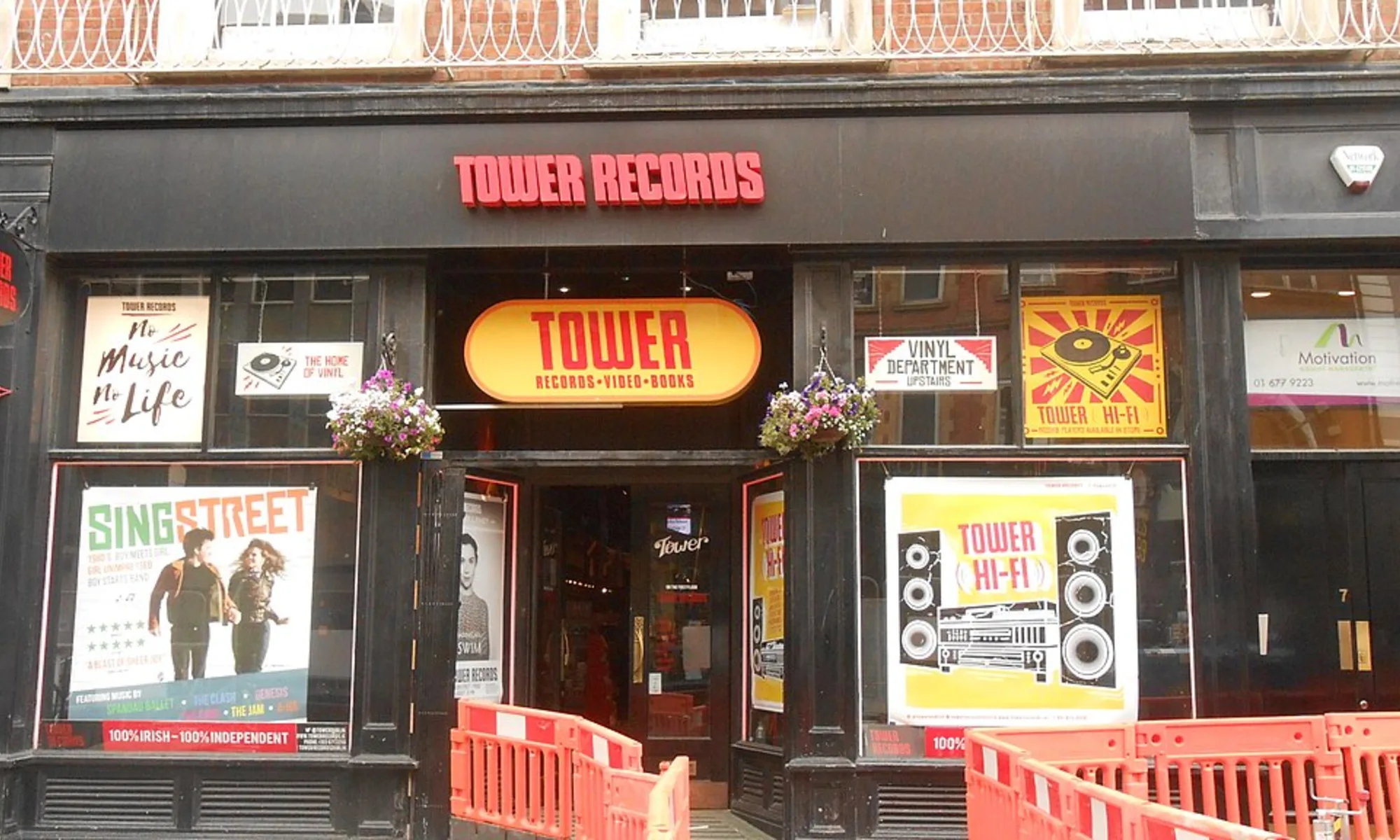
Tower Records started in 1960 because Russ Solomon just really loved selling records.
He’d been running a small record section inside his father’s drugstore in Sacramento, California. People kept showing up. The selection kept growing. Eventually the logical next move was a whole store built entirely around music, and Tower Records was born.
That impulse to carry everything and let people discover it became the soul of the company for the next four decades.
The store that changed music shopping
Walking into a Tower Records was its own experience.
The stores were enormous. They were organized by genre, then by artist, then sometimes by label or country of origin. You could find imports and deep catalog cuts that most stores never bothered to stock, right alongside the biggest new releases.
Staff members wrote handwritten recommendation cards and tucked them next to albums they loved. Music magazines lined the walls. Listening stations let you hear something before you bought it.
You could spend hours in a Tower Records and feel like it was time well spent.
The Sunset store
In 1971, Tower opened a store on Sunset Boulevard in West Hollywood. It became one of the most famous record stores in the world.
Artists came in to sign albums. Fans lined up at midnight for the biggest new releases. It was part store, part cultural gathering point, the kind of place that made people feel like they were at the center of something real.
The Sunset store is why Tower has such a strong hold on people’s memories. It represented what music retail could be at its absolute best.
The peak years
By the 1990s, Tower Records was operating in about 15 countries. The chain built its reputation by going deeper into music than anyone else, carrying titles that big-box retailers like Best Buy and Walmart simply never bothered to stock.
Tower was a destination. For serious music fans, it was the place.
When the market shifted
In 1999, Napster arrived. Suddenly millions of people were downloading music from home for free. Then iTunes launched in 2003, letting people buy individual songs for 99 cents instead of full albums.
Physical CD sales started falling across the industry. Big-box retailers had already been selling popular CDs at steep discounts to get people in the door to buy televisions and computers. Music was a loss leader. Tower’s entire business was music, so matching those prices was a real challenge.
Meanwhile, Tower had borrowed heavily to fund its international expansion. That debt made every strategic decision harder and left the company with little room to experiment while the market was moving fast.
Russ Solomon and the stores he loved
Russ Solomon believed deeply in the kind of record store that had built Tower’s reputation. Big physical stores, staffed by people obsessed with music.
That belief was genuinely part of what made Tower great. But the market was shifting in ways that were hard for any large physical music chain to absorb. CD sales were falling, digital competition was growing, and the debt was mounting. It all stacked up at once.
Tower kept investing in stores at a moment when flexibility mattered more than expansion.
Bankruptcy and the end
Tower Records filed for Chapter 11 bankruptcy in August 2004 and attempted to restructure. It filed again in August 2006, and this time the company went into liquidation. All US stores held going-out-of-business sales and closed by the end of 2006.
For people who grew up browsing the aisles, it felt like the end of an era, because it mostly was.
The Japan story
Here is the twist: Tower Records Japan survived.
It separated from the US parent and continued operating under local ownership. Today it still runs stores across Japan. That says something meaningful about the brand itself. In the right market, with the right structure, Tower worked.
What ended in the United States was a business model the shifting market had made unsustainable, compounded by years of accumulated debt.
What Tower Records left behind
Tower built something people still talk about decades later. The stores gave serious music fans a place that felt designed for them, with deep catalogs and staff who actually cared about music.
The Tower Records name came back as an online store. But the physical chain, with its Sunset Boulevard flagship and its legendary selection, was a one-of-a-kind thing.
That is what people miss.