
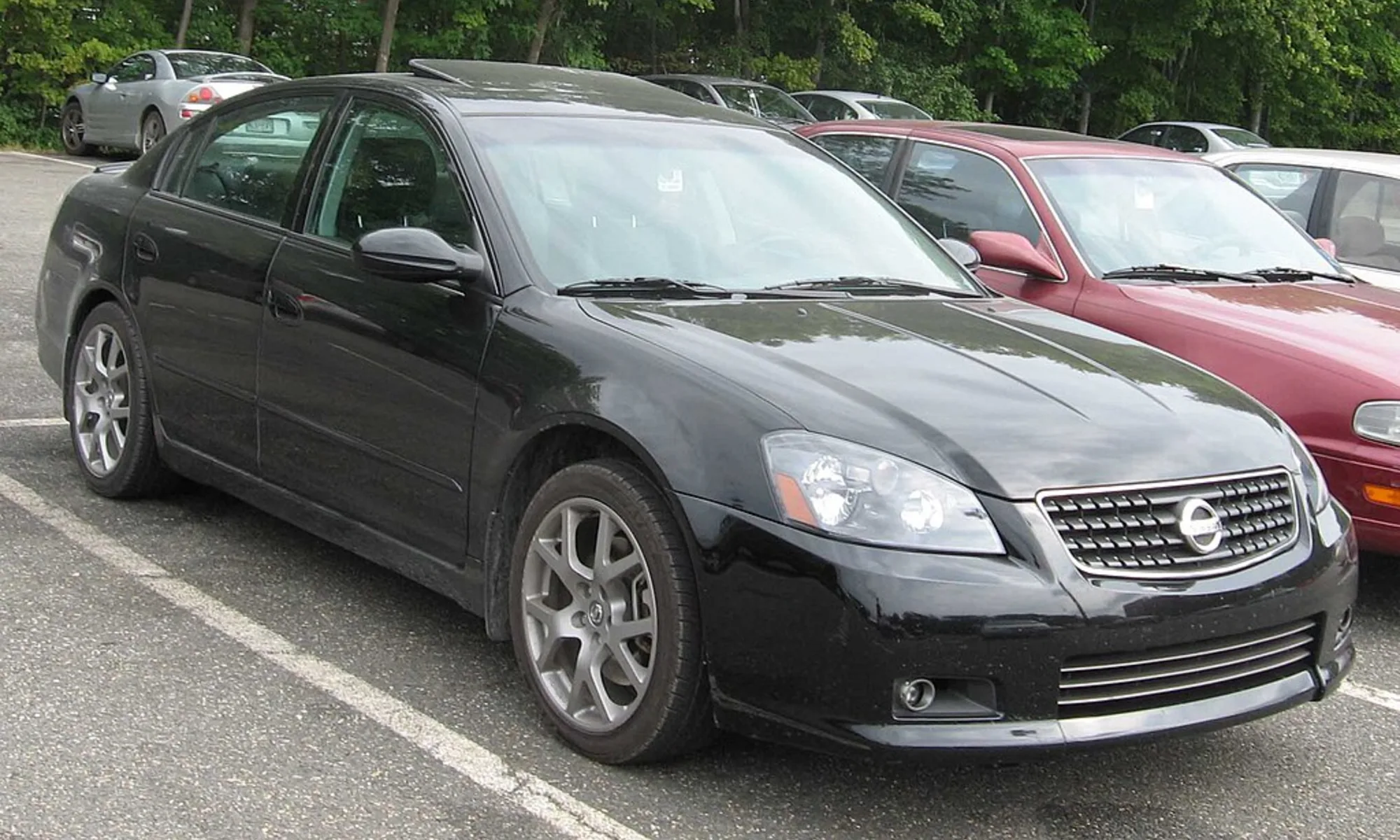
Nissan officially announced the Altima discontinuation in September 2024. Production ended in early 2025.
What Happened to the Nissan Altima? (Quick Answer)
The Nissan Altima was discontinued after the 2024 model year, ending a 31-year run. Nissan announced the decision in September 2024, and the last cars were built in early 2025.
Why the Altima ended:
- Sedan sales fell sharply starting around 2014 as Americans shifted to SUVs and crossovers
- Sedans generate lower profit margins than SUVs
- The Altima relied heavily on fleet sales (rental cars, corporate buyers), which hurt its retail image over time
- Nissan chose to concentrate resources on the Rogue and other crossovers
No direct replacement is planned. The Rogue is now Nissan’s main volume seller, with the Sentra staying on as the only remaining sedan for now.
The Nissan Altima sold roughly 6.8 million units in the U.S. between 1993 and 2024. Sales peaked in the mid-2010s, with over 333,000 units in multiple years. By 2024, annual sales had fallen to approximately 85,000 units.
The Altima Legacy: A Complete History
First Generation (1993-1997): The Beginning
The Nissan Altima debuted in 1993 as a replacement for the Nissan Stanza, entering the competitive midsize sedan segment.
It came with a 2.4L 4-cylinder engine (150 hp) and a conservative design focused on reliability. The goal was a credible, affordable alternative to the Honda Accord and Toyota Camry.
The first-gen Nissan Altima wasn’t flashy, but it offered honest transportation at a competitive price. Build quality exceeded expectations for the segment, establishing Nissan as a serious contender.
Second Generation (1998-2001): Adding Power
The second generation brought more aggressive styling, better interior materials, and a big addition: a 3.5L V6 option producing 190 hp. Handling improved too. Sales grew steadily as Nissan refined the formula, and the V6 attracted buyers who wanted sedan practicality with real power.
Third Generation (2002-2006): The Breakthrough
This generation established the Altima as a top-tier competitor.
This generation hit the sweet spot of style, performance, and value. The Nissan Altima earned a spot on Car and Driver’s 10Best list, got a bold new design, and bumped the V6 to 245 hp. Annual sales topped 250,000 units. The SE-R and 3.5 SE models offered genuine driving excitement that was rare in family sedans.
Fourth Generation (2007-2012): Peak Popularity
The golden age of the Altima.
A two-door coupe version launched in 2008, adding sporty appeal. A CVT transmission became standard — a practical choice for fuel economy, though it would become controversial later. The Nissan Altima was consistently in the top three midsize sedans, and during 2012-2015 it hit peak annual sales of over 333,000 units, sitting at the top of the U.S. sedan market for stretches at a time. Fleet sales to rental companies were also strong during this period.
Fifth Generation (2013-2018): The CVT Problem Era
Design Evolution:
- Lighter weight through aluminum use
- More fuel-efficient powertrain
- Enhanced safety features (blind-spot monitoring)
- Modern styling with Nissan’s V-Motion grille
The CVT Controversy:
The 2013-2018 Nissan Altima became known for premature CVT failures. Owners reported transmission problems at 60,000-100,000 miles, with replacement costs in the $3,000-$5,000 range. Multiple class-action lawsuits were filed, and Nissan eventually extended warranties on some models in response. Consumer Reports pulled its recommendation, and resale values suffered.
Sixth Generation (2019-2024): The Final Chapter
The last generation introduced innovations but couldn’t reverse declining sedan sales.
The final generation brought meaningful improvements. The Nissan Altima was the first midsize sedan in its class to offer AWD, arriving before the Honda Accord or Toyota Camry added it. A 2.0L VC-Turbo engine (248 hp) with variable compression technology was a rare feature in the segment. ProPILOT Assist brought semi-autonomous highway driving, and standard Apple CarPlay and Android Auto came on all trims. The CVT was revised and more reliable than the 2013-2018 version.
Despite these improvements, sales kept falling as Americans moved to SUVs and crossovers.
Why Was the Nissan Altima Discontinued?
The Altima’s discontinuation wasn’t due to poor quality—it fell victim to market forces and changing consumer preferences.
1. The SUV and Crossover Takeover
Market Shift Data:
| Year | Sedan Market Share | SUV/Crossover Market Share | Change |
|---|---|---|---|
| 2010 | 50.2% | 35.8% | Sedans lead |
| 2015 | 42.1% | 43.6% | Nearly even |
| 2020 | 27.3% | 56.4% | SUVs dominate |
| 2024 | 19.8% | 63.7% | Sedans collapse |
What Buyers Want Now:
- Higher seating position - Better visibility and command of the road
- Perceived safety - Larger vehicles feel safer (even if data doesn’t always support this)
- Cargo versatility - Easier loading, more space
- AWD standard - Most SUVs come with AWD; sedans typically FWD
- Status symbol - SUVs convey success; sedans seen as “basic”
Between 2014 and 2024, sedan sales declined significantly across the U.S. market. Even top sellers like the Accord and Camry weren’t immune — they just had stronger brand loyalty to cushion the fall.
2. Altima Sales Collapsed
While remaining competitive in features, Altima sales steadily declined year over year.
Sales History:
| Year | Units Sold | Notes |
|---|---|---|
| 2012 | 333,082 | Near peak |
| 2014 | 335,644 | All-time high |
| 2015 | 333,398 | Near peak |
| 2018 | 209,183 | Declining |
| 2020 | 158,704 | Sedan shift accelerates |
| 2023 | 114,286 | — |
| 2024 | ~85,000 | Final model year |
Why Sales Fell:
- Overall sedan market shrinking
- Altima had higher fleet sales percentage than competitors
- CVT reliability issues hurt brand reputation
- Competition from Nissan’s own Rogue crossover
- Faster depreciation than Accord/Camry deterred buyers
3. Profitability Concerns
The Economics:
- SUV profit margins: $8,000-$12,000 per vehicle
- Sedan profit margins: $2,000-$4,000 per vehicle
- Platform costs: Similar development costs but lower returns
Factory Utilization:
- Nissan needed to optimize production capacity
- Converting sedan lines to SUV production more profitable
- Smyrna, Tennessee plant prioritizing Pathfinder and Rogue
- Altima competing for resources with more profitable vehicles
Price Pressure: The midsize sedan segment is extremely price-sensitive. Heavy discounting to move inventory eroded already-thin profit margins.
4. Fleet Sales Dependency
A significant weakness of the Altima was its reliance on fleet buyers.
Fleet Sales Breakdown:
- Rental car companies: ~25% of sales
- Corporate fleets: ~7% of sales
- Government agencies: ~3% of sales
- Total fleet dependency: ~35%
Compare to competitors:
- Honda Accord: 15-18% fleet sales
- Toyota Camry: 15-20% fleet sales
- Nissan Altima: 35% fleet sales ⚠️
Fleet sales created a difficult cycle. Fleet deals are negotiated at steep discounts, so profit margins were thin. High fleet volume flooded the used market with ex-rental Altimas, hurting resale values. That, combined with the “rental car” perception, made the brand feel less desirable to retail buyers — which pushed Nissan to rely even more on fleet sales to hit volume targets.
5. Nissan’s Financial Struggles
Corporate Context:
- Nissan-Renault Alliance faced financial pressure post-Carlos Ghosn
- Need to streamline product lineup and cut costs
- Alliance restructuring created uncertainty
- Focus resources on high-growth, high-profit segments
Product Rationalization Strategy:
Discontinued:
- Nissan Altima (2024)
- Nissan Maxima (2023)
- Nissan Sentra (rumored for 2026)
- Nissan Titan (rumored for 2025)
Continued Focus:
- Nissan Rogue (volume leader)
- Nissan Pathfinder (family SUV)
- Nissan Armada (full-size SUV)
- Nissan Frontier (midsize truck)
- Nissan Ariya (electric crossover)
- Nissan Z (sports car)
6. Intense Competition From All Sides
Traditional Sedan Competitors:
- Honda Accord: Perennial Car and Driver 10Best winner, strong hybrid
- Toyota Camry: Unmatched reliability reputation, all-new 2025 model
- Mazda6: Superior driving dynamics, premium interior
- Hyundai Sonata: Aggressive value, 10-year warranty
- Kia K5: Bold styling, loaded with tech
New Competitors:
- Tesla Model 3: Electric sedan with tech appeal
- Compact luxury sedans (used): BMW 3-Series, Mercedes C-Class, Audi A4
- Crossover alternatives: Nissan Rogue, Honda CR-V, Toyota RAV4, Mazda CX-5
Price Erosion: Used luxury sedans at 3-5 years old now cost similar to new Altimas, giving buyers premium options at midsize sedan prices.
Should You Buy a 2024 Nissan Altima? (Decision Guide)
Follow these steps to determine if buying a discontinued Altima makes sense.
Step 1: Calculate Potential Depreciation
Discontinued vehicles typically lose value faster than competitors.
Example Scenario:
- 2024 Nissan Altima SV: $28,000 purchase price
- After 5 years: Estimated value $10,000-$12,000 (57-64% depreciation)
Compare to:
- 2024 Honda Accord Sport: $29,000 purchase price
- After 5 years: Estimated value $14,000-$16,000 (45-52% depreciation)
Extra depreciation cost: ~$3,000-$4,000 over 5 years
Step 2: Check Warranty Coverage
Standard Nissan Warranty:
- Basic: 3 years/36,000 miles
- Powertrain: 5 years/60,000 miles
- Corrosion: 5 years/unlimited miles
- Roadside assistance: 3 years/36,000 miles
Extended Warranty Recommendation:
For discontinued Altima, strongly consider extended warranty, especially for:
- CVT transmission coverage
- Electronics and infotainment
- Coverage extending to 100,000+ miles
Cost vs. Benefit:
- Extended warranty: $1,500-$3,000
- CVT replacement out of warranty: $4,000-$6,000
- Math: Warranty pays for itself if transmission fails
Step 3: Evaluate Your Needs
Buy a 2024 Altima if:
- ✅ You plan to keep it 7-10+ years (depreciation less relevant)
- ✅ You value the $4,000+ discounts currently available
- ✅ You need AWD in a sedan (unique offering)
- ✅ You prioritize upfront savings over resale value
- ✅ You’re comfortable with Nissan service network
- ✅ The warranty/extended warranty provides peace of mind
Choose Accord or Camry if:
- ❌ You typically trade vehicles every 3-5 years
- ❌ Resale value is important to you
- ❌ You want the “safest” long-term choice
- ❌ Brand perception matters (for business use, etc.)
- ❌ You’re concerned about parts availability in 10+ years
- ❌ You want a vehicle that holds value
Step 4: Shop Used Inventory
New 2024 Altimas are no longer being produced, but used and certified pre-owned examples are available from dealers and private sellers. Because the model was discontinued, resale prices may be softer than comparable Accord or Camry inventory. Check Kelley Blue Book and Edmunds for current used values before negotiating.
Step 5: Consider Alternatives
If hesitant about discontinued Altima, evaluate these:
| Vehicle | Starting Price | Key Advantage | Best For |
|---|---|---|---|
| Honda Accord | $28,895 | Best overall package, reliability | Long-term ownership |
| Toyota Camry | $26,420 | Legendary reliability, resale | Maximum resale value |
| Mazda6 | $25,945 | Premium feel, driving dynamics | Driving enthusiasts |
| Hyundai Sonata | $26,500 | 10-year warranty, features | Warranty peace of mind |
| Kia K5 | $25,990 | Bold styling, tech | Style-conscious buyers |
| Nissan Rogue | $28,460 | Crossover utility, stays with Nissan | SUV converts |
What Made the Altima Special?
Despite discontinuation, the Altima had genuine strengths that earned customer loyalty.
Standout Features Over 31 Years
1. Value Proposition
- Competitive pricing at every trim level
- Standard features that were optional on rivals
- Lower cost of ownership than European brands
- Strong equipment-to-price ratio
2. Performance Options
- Powerful 3.5L V6 engines (up to 270 hp)
- Available turbocharged VC-Turbo (248 hp)
- Sporty SR trim with paddle shifters and sport suspension
- More fun-to-drive than Camry, especially V6 models
3. Industry-First AWD
- Only midsize sedan in class with AWD (2019-2021)
- Beat Honda and Toyota to AWD by 2-3 years
- Real advantage in snow-belt states
- Confidence-inspiring in adverse weather
4. Advanced Technology
- ProPILOT Assist: Semi-autonomous highway driving
- Comprehensive safety suite (Safety Shield 360)
- Modern infotainment with wireless connectivity
- Reasonable tech pricing compared to luxury brands
5. Spacious Interior
- Class-leading rear legroom in some generations
- Comfortable seating for five adults
- Generous trunk space (15.4 cubic feet)
- Smart storage solutions throughout cabin
What Owners Loved
Common Owner Praise:
- “Perfect commuter car—comfortable and reliable”
- “The V6 is a hidden gem with serious power”
- “Great value compared to Accord and Camry”
- “Spacious enough for growing family”
- “AWD is a game-changer in Michigan winters”
- “Smooth highway cruiser with good mpg”
Best Use Cases:
- Daily commuting (comfortable, efficient)
- Road trips (quiet, spacious)
- Family transportation (practical, affordable)
- First new car (good value, modern features)
- Winter driving (AWD option)
Known Issues and Common Complaints
The CVT Transmission Problem
Most Significant Issue: Nissan’s CVT (Continuously Variable Transmission) became infamous for reliability problems.
Affected Years: Primarily 2013-2018, improved in 2019+
Common Problems:
- Premature failure at 60,000-100,000 miles
- Shuddering and vibration during acceleration
- Hesitation when merging or passing
- Overheating in hot climates or towing
- Whining or grinding noises
- Complete transmission failure requiring replacement
Cost Impact:
- Repair cost: $3,000-$5,000 for CVT replacement
- Under warranty: Covered (if still under powertrain warranty)
- Extended warranty: Nissan offered extensions after lawsuits
CVT Controversy: Multiple class-action lawsuits were filed against Nissan for CVT failures. The company extended warranties on some models and issued service bulletins. If buying a used Altima from 2013-2018, verify CVT replacement history or current condition.
Improved in Later Models: The 2019+ Altimas feature improved CVT8 transmission with better reliability, though long-term data is still limited.
Other Common Issues
2. Interior Quality
- Hard plastics throughout cabin
- Less refined than Honda Accord interior
- Inconsistent fit and finish on some models
- Road noise intrusion on highway
3. Rapid Depreciation
- Loses 50%+ of value in first 3 years
- Fleet sales hurt resale value
- “Rental car” perception damages resale
- Faster depreciation than Accord/Camry by 10-15%
4. Brand Perception
- Seen as “appliance” rather than aspirational
- Lacks prestige of Honda/Toyota
- Fleet sales created common/boring image
- Marketing failed to create emotional connection
5. Reliability Concerns (Varies by Year)
- CVT issues (2013-2018)
- Some electrical gremlins reported
- Infotainment glitches in earlier touchscreen models
- Paint quality issues on some colors
Reliability Comparison (2023 Data)
| Model | J.D. Power Score | Consumer Reports | Common Issues |
|---|---|---|---|
| Honda Accord | 82/100 | 4/5 ⭐⭐⭐⭐ | Minor electrical |
| Toyota Camry | 81/100 | 5/5 ⭐⭐⭐⭐⭐ | Very few |
| Mazda6 | 80/100 | 4/5 ⭐⭐⭐⭐ | Infotainment |
| Nissan Altima | 73/100 | 3/5 ⭐⭐⭐ | CVT transmission |
Note: 2019+ Altima models show improved reliability scores compared to 2013-2018 generation.
The Final Model Year: 2024 Nissan Altima
Available Trim Levels
S (Base Trim)
- 2.5L 4-cylinder engine (188 hp, 180 lb-ft)
- 8-inch touchscreen display
- Apple CarPlay/Android Auto (wired)
- Nissan Safety Shield 360
- LED headlights and taillights
- MSRP: Starting at $26,140
SV (Mid-Level)
- All S features, plus:
- Remote start system
- Dual-zone automatic climate control
- Blind-spot monitoring
- Rear cross-traffic alert
- 17-inch aluminum wheels
- MSRP: Starting at $27,840
SR (Sport Trim)
- Sport-tuned suspension
- 19-inch black aluminum wheels
- Leather-wrapped sport steering wheel
- Sport bucket seats
- Paddle shifters
- Dark chrome exterior accents
- MSRP: Starting at $28,940
SL (Luxury Trim)
- Leather-appointed seats
- ProPILOT Assist
- Heated front seats
- Heated steering wheel
- Power moonroof
- 8-way power driver’s seat
- MSRP: Starting at $31,240
Platinum (Top Trim)
- Premium quilted leather seats
- 9-inch touchscreen with navigation
- Bose Premium Audio (9 speakers)
- Around View Monitor
- All available features
- MSRP: Starting at $35,240
Engine Options
2.5L 4-Cylinder (Standard)
- Power: 188 horsepower @ 6,000 rpm
- Torque: 180 lb-ft @ 3,600 rpm
- Transmission: Xtronic CVT
- Drive: FWD or AWD
- Fuel Economy:
- FWD: 28 city / 39 highway / 32 combined mpg
- AWD: 26 city / 36 highway / 30 combined mpg
2.0L VC-Turbo (SR Only)
- Power: 248 horsepower @ 5,600 rpm
- Torque: 280 lb-ft @ 1,600-4,800 rpm
- Technology: Variable compression ratio (8:1 to 14:1)
- Transmission: Xtronic CVT
- Drive: FWD only
- Fuel Economy: 25 city / 34 highway / 29 combined mpg
VC-Turbo Advantage: The variable compression engine adjusts compression ratio based on driving conditions—high compression for efficiency, low compression for power. This technology is rare in the segment and delivers impressive performance.
Standard Safety Features (All Trims)
Nissan Safety Shield 360:
- Automatic emergency braking with pedestrian detection
- Blind spot warning (SV and above)
- Rear cross traffic alert (SV and above)
- Lane departure warning
- Rear automatic braking
- High beam assist
Available Advanced Safety (SL/Platinum):
- ProPILOT Assist (adaptive cruise + lane centering)
- Traffic sign recognition
- Around View Monitor (360-degree camera)
Color Options (2024)
Exterior Colors:
- Super Black
- Brilliant Silver Metallic
- Gun Metallic
- Scarlet Ember Tintcoat
- Pearl White Tricoat
- Deep Blue Pearl
- Sunset Drift ChromaFlair (extra cost)
Interior Colors:
- Charcoal cloth (S, SV, SR)
- Black leather (SL)
- Tan leather (SL, Platinum)
Final Edition: Unlike some discontinued vehicles, Nissan has not announced a special “Final Edition” Altima with unique badging or features. The 2024 model year represents the end without ceremony.
What Happens After Discontinuation?
Parts and Service Support
Nissan’s Commitment:
- Parts availability guaranteed for minimum 10 years
- Service training continues for existing technicians
- Warranty honored at all Nissan dealerships
- Technical support for repairs maintained
Realistic Expectations:
Years 1-10 (2025-2035):
- ✅ All parts readily available
- ✅ Common maintenance items well-stocked
- ✅ Dealer service operates normally
- ✅ No impact on daily ownership
Years 10-20 (2035-2045):
- ⚠️ Some specialty parts may require ordering
- ⚠️ Body panels could become limited
- ⚠️ Dealer network may consolidate
- ✅ Major mechanical parts still available
Years 20+ (2045+):
- ❌ Rare parts difficult to source
- ❌ Body panels likely discontinued
- ⚠️ May need aftermarket or used parts
- ✅ Engine/transmission parts from parts cars
Impact on Current Owners
If You Already Own an Altima:
Immediate (2024-2025):
- No change to daily ownership
- Warranty remains valid
- Service unchanged
- Parts fully available
Near-Term (2025-2030):
- Expect 10-15% additional depreciation hit
- Regular maintenance continues normally
- No parts availability concerns
- Dealer service network stable
Long-Term (2030+):
- Consider selling before parts become scarce
- Keep maintenance records meticulously
- Extended warranty becomes more valuable
- May want to keep car as long-term keeper
Resale Strategy:
- Sell within 3-5 years: Minimize depreciation impact
- Keep 10+ years: Ride out depreciation, maximize value
- Avoid: Selling years 5-8 (worst depreciation period)
The Altima’s Place in Automotive History
Sales Achievements
Cumulative Sales (1993-2024): Approximately 6.8 million Altimas sold in the United States over 31 years
Top sales years:
- 2014: 335,644 units (all-time high)
- 2015: 333,398 units
- 2012: 333,082 units
- 2013: 320,723 units
- 2016: 307,380 units
Market Position:
- Consistently Top 3 in midsize sedan segment (2007-2017)
- #1 selling car in America multiple months (2012-2013)
- Peak market share: 18.2% of midsize sedan segment
Awards and Recognition
Notable Honors:
- Car and Driver 10Best (2002, 2003, 2004, 2005, 2006)
- IIHS Top Safety Pick (multiple years)
- Kelley Blue Book Best Buy Award
- J.D. Power APEAL Award (Automotive Performance, Execution and Layout)
- MotorTrend Buyer’s Guide Recommended
- Edmunds Editor’s Choice (various years)
Quality Recognition:
- High marks for initial quality (J.D. Power IQS)
- Strong owner satisfaction scores (early generations)
- Value awards from multiple publications
Cultural Impact
The Altima in American Life:
Ubiquity:
- Everywhere on American roads (especially rentals)
- Popular first car for young professionals
- Reliable commuter for millions
- Frequent choice for ride-share drivers
Pop Culture:
- Appeared in countless TV shows and movies as “everyman’s car”
- Referenced in rap and hip-hop lyrics
- Symbol of middle-class transportation
- Subject of internet memes about driving behavior
Social Media Memes:
- “Nissan Altima with temporary tags” jokes
- “Most dangerous driver on the road” memes
- TikTok videos about Altima driving habits
- Reddit threads dedicated to Altima observations
The Reality: While memes portrayed Altima drivers negatively, the stereotype says more about the car’s popularity and affordability than actual driver behavior.
The Sedan’s Uncertain Future
Industry-Wide Sedan Discontinuations
The Altima joins a growing graveyard of discontinued sedans:
Recently Discontinued:
- Chevrolet Cruze (2019)
- Chevrolet Impala (2020)
- Ford Fusion (2020)
- Ford Taurus (2019)
- Buick LaCrosse (2019)
- Buick Regal (2020)
- Chrysler 200 (2017)
- Dodge Dart (2016)
- Dodge Charger (2024 - moving to electric)
- Volkswagen Passat (2022)
- Honda Accord Coupe (2017)
- Nissan Maxima (2023)
- Nissan Altima (2024)
Rumored to be Next:
- Nissan Sentra (likely 2026)
- Mazda6 (uncertain future)
- Volkswagen Jetta (North American market)
- Chevrolet Malibu (reports suggest 2024/2025)
Sedans That Survive (For Now)
Still in Production:
- Honda Accord - Refreshed 2023, strong sales
- Toyota Camry - All-new 2025 model launching
- Hyundai Sonata - Redesigned for 2024
- Kia K5 - Continuing with updates
- Mazda6 - Status uncertain for U.S. market
- Subaru Legacy - Continues with boxer engine
- Tesla Model 3 - Electric sedan leader
- BMW 3-Series, Mercedes C-Class, Audi A4 - Luxury sedans remain
Market Reality: Analysts predict that by 2030, sedans may represent less than 10% of new vehicle sales in the U.S., compared to 50% in 2010. The body style is in serious long-term decline.
Why Some Sedans Survive:
- Strong brand loyalty (Accord, Camry)
- Hybrid powertrains appeal (efficiency matters)
- Fleet sales can’t all switch to SUVs
- Some buyers still prefer sedans
- International markets still buy sedans
Will Sedans Ever Come Back?
Factors That Could Revive Sedans:
1. Gas Prices If fuel prices spike significantly:
- SUV operating costs become painful
- Sedan efficiency advantage matters again
- Consumer preferences could shift
2. Electric Vehicle Transition
- EVs are often sedan-shaped (Model 3, Ioniq 6)
- Aerodynamics matter more for EV range
- Sedans more efficient than SUVs
- Could rebrand as “electric sedans” vs. traditional
3. Urbanization
- Cities favor smaller, efficient vehicles
- Parking challenges in urban areas
- Sedans easier to maneuver
- Younger urban buyers may prefer sedans
4. Generational Shifts
- Gen Z may reject SUV trend
- Environmental concerns favor efficiency
- Different status symbols than Boomers/Gen X
But Realistically: Most experts believe sedan decline is permanent in North America. The shift to SUVs represents fundamental preference changes unlikely to reverse.
Will Nissan Replace the Altima?
No Direct Sedan Replacement Planned
Nissan’s Official Position:
- No sedan replacement for the Altima
- Company shifting focus to crossovers and EVs
- Sentra remains (for now) as budget sedan option
- Rogue positioned as volume leader
Product Strategy Going Forward:
Continued Models:
- Nissan Rogue: Compact crossover, volume leader
- Nissan Pathfinder: 3-row family SUV
- Nissan Armada: Full-size body-on-frame SUV
- Nissan Frontier: Midsize pickup truck
- Nissan Titan: Full-size pickup (future uncertain)
- Nissan Ariya: Electric crossover
- Nissan Z: Sports car enthusiast model
- Nissan Sentra: Subcompact sedan (likely temporary)
Discontinued/Uncertain:
- Nissan Altima (2024)
- Nissan Maxima (2023)
- Nissan Sentra (rumored 2026 discontinuation)
- Nissan Leaf (being phased out for Ariya)
The Electric Sedan Question
Potential Future: Nissan may introduce an electric sedan, but unlikely to carry “Altima” nameplate.
Why Electric Sedans Make Sense:
- Aerodynamics improve EV range
- Lower center of gravity (battery placement)
- Tech-forward buyers prefer sedans
- Compete with Tesla Model 3, Hyundai Ioniq 6
Potential Timeline:
- 2026-2028: Possible announcement
- 2028-2030: Potential launch
- New nameplate: Likely not “Altima” (fresh start)
Nissan’s EV Plans:
- Focus on Ariya crossover expansion
- Multiple EV models planned by 2030
- Electric sedan possible but not confirmed
- Priority: SUVs and crossovers in EV form
Altima vs. Competitors: Final Comparison
2024 Midsize Sedan Head-to-Head
| Feature | Altima 2.5 | Accord Sport | Camry LE | Sonata SEL |
|---|---|---|---|---|
| Base Price | $26,140 | $28,895 | $26,420 | $26,500 |
| Horsepower | 188 hp | 192 hp | 203 hp | 191 hp |
| Torque | 180 lb-ft | 192 lb-ft | 184 lb-ft | 181 lb-ft |
| MPG (Combined) | 32 | 32 | 32 | 31 |
| Cargo Space | 15.4 cu ft | 16.7 cu ft | 15.1 cu ft | 16.0 cu ft |
| Rear Legroom | 37.4” | 40.4” | 38.0” | 40.4” |
| Warranty (Basic) | 3/36 | 3/36 | 3/36 | 5/60 |
| Warranty (Powertrain) | 5/60 | 5/60 | 5/60 | 10/100 |
| AWD Available | Yes | No | Yes | No |
| Reliability (CR) | 3/5 | 4/5 | 5/5 | 4/5 |
| 5-Year Resale | ~40% | ~50% | ~52% | ~43% |
Winner by Category
| Category | Winner | Reason |
|---|---|---|
| Best Value | Altima | Lowest price, AWD available, current discounts |
| Best Overall | Accord | Driving dynamics, quality, reliability balance |
| Most Reliable | Camry | Legendary Toyota dependability, resale value |
| Best Warranty | Sonata | 10-year/100,000-mile powertrain coverage |
| Best Interior | Accord | Premium materials, design, space |
| Best Performance | Accord (Hybrid) | 204 hp, best acceleration, excellent mpg |
| Best for Snow | Altima or Camry | AWD available (Altima since 2019) |
Recommendation by Buyer Type
Choose Altima if:
- You want maximum upfront savings ($4k+ off)
- You need AWD in a sedan
- You plan to keep the car 8-10+ years
- You prioritize price over resale value
- You’re comfortable with Nissan’s track record
Choose Accord if:
- You want the “best” overall sedan
- Driving enjoyment matters
- You value interior quality
- Trade-in every 5 years is your pattern
- You want a safe, well-rounded choice
Choose Camry if:
- Reliability is your #1 priority
- You want maximum resale value
- You prefer proven, conservative choice
- You’re keeping car 10+ years
- Peace of mind matters most
Choose Sonata if:
- You want the best warranty
- You like bold, distinctive styling
- You prioritize tech features
- You want value with modern appeal
Timeline: The Complete Altima Story
| Year | Milestone | Significance |
|---|---|---|
| 1993 | First-generation Altima launches | Replaces Stanza, enters midsize sedan market |
| 1998 | Second-generation debuts with V6 | 190 hp V6 attracts performance buyers |
| 2002 | Third-generation earns 10Best | Peak critical acclaim begins |
| 2007 | Fourth-generation launches | Becomes volume leader, best-seller |
| 2008 | Altima Coupe introduced | Expands appeal to younger buyers |
| 2012–2015 | Peak sales era, over 333,000 units annually | Top of the midsize sedan market |
| 2013 | Fifth-generation with standard CVT | CVT problems begin emerging |
| 2013-2016 | CVT reliability issues widespread | Class-action lawsuits filed |
| 2016 | Nissan extends CVT warranties | Response to reliability complaints |
| 2018 | Sales drop below 200k | Market shift to SUVs accelerates |
| 2019 | Sixth-generation debuts with AWD | Industry-first AWD in segment |
| 2020 | COVID-19 pandemic impacts sales | Sedan decline accelerates |
| 2023 | Nissan Maxima discontinued | Warning sign for Altima’s future |
| September 2024 | Nissan announces Altima discontinuation | End of 31-year run confirmed |
| December 2024 | Final Altimas being produced | Last units rolling off assembly line |
| Early 2025 | Production officially ends | End of an era |
Frequently Asked Questions
When did Altima production end?
Production ended in early 2025 at Nissan’s Smyrna, Tennessee plant. The 2024 model year was the last.
Will Nissan continue servicing my Altima after discontinuation?
Yes, absolutely. Nissan is legally required to provide parts and service for at least 10 years after discontinuation. All Nissan dealerships will continue to service Altimas with full factory support, technical training, and warranty coverage.
Should I buy an extended warranty for a discontinued Altima?
Strongly recommended, especially for the CVT transmission. Extended warranties from Nissan or reputable third parties typically cost $1,500-$3,000, while CVT replacement can cost $4,000-$6,000. The math favors buying coverage, particularly for a discontinued model.
Will my Altima suddenly be worth less?
Discontinuation causes an immediate 10-15% depreciation hit beyond normal depreciation. However, if you plan to keep the car long-term (7+ years), this matters less. Trade-in values will be lower than Accord or Camry, but the upfront discount can offset this.
What’s the best model year to buy used?
2019-2024 models have the most reliable CVTs and modern features. Avoid 2013-2016 due to widespread CVT issues. If buying older, 2007-2012 with traditional automatic transmission (not CVT) are good bets, especially V6 models.
Can I still get parts in 10-15 years?
Common parts (brakes, filters, etc.): Indefinitely available
Mechanical parts (engine, transmission): 15-20+ years typical
Body panels and trim: 10-15 years, then may become scarce
Electronics: 10-15 years, potentially longer
Nissan typically supports vehicles for 15-20 years with most parts. Critical items remain available even longer.
What if I need warranty service after discontinuation?
Your warranty remains fully valid at all Nissan dealerships nationwide. Discontinuation doesn’t affect warranty coverage, claims, or service. The 3-year/36,000-mile basic and 5-year/60,000-mile powertrain warranties are honored exactly as if the car were still in production.
Is my current Altima suddenly unreliable because it’s discontinued?
No. Discontinuation is a business decision, not a quality issue. Your Altima is exactly as reliable the day after the announcement as it was the day before. Continue normal maintenance and it will serve you just as long as any other sedan.
Should I sell my Altima now or keep it?
Depends on your situation:
Sell now if:
- You planned to upgrade soon anyway
- Maximizing resale value is priority
- You want to avoid further depreciation
- You drive low miles (car worth more now)
Keep it if:
- Car is paid off or nearly paid off
- You planned to keep 5+ more years anyway
- Car is running well with low miles
- You don’t want a car payment
Don’t panic sell. Discontinuation doesn’t make your car worthless or unreliable.
What should I buy instead of an Altima?
Best alternatives:
- Honda Accord - Best overall sedan, strong reliability
- Toyota Camry - Maximum dependability and resale value
- Mazda6 - Premium feel, excellent driving dynamics
- Hyundai Sonata - Great warranty, modern features
- Nissan Rogue - Stay with Nissan, get crossover utility
Decision factors: Budget, need for AWD, importance of resale value, typical ownership length.
Related Articles & Resources
External Resources
Official Nissan:
Automotive Research:
- Kelley Blue Book - Altima Values
- Edmunds - Altima Reviews
- Consumer Reports - Altima Ratings
- J.D. Power - Altima Dependability
Owner Communities:
- NissanClub.com Forums
- r/Nissan on Reddit
- Altima Owner Groups on Facebook
- MyNissanLeaf Forums (also covers Altima)
The Bottom Line
The Nissan Altima discontinuation represents more than just the end of one model—it symbolizes the American automotive market’s dramatic transformation. For 31 years and 6.8 million sales, the Altima served as reliable, affordable transportation for families, students, and commuters across America.
What We’ll Remember
The Altima’s Legacy:
- Proved Nissan could compete with Honda and Toyota
- Pioneered AWD in affordable midsize sedans
- Served millions with honest, practical transportation
- Represented attainable middle-class mobility
- Created lasting memories for multiple generations
Lessons Learned:
- Market forces trump product quality
- Fleet sales dependency creates long-term brand damage
- CVT reliability issues can destroy reputation
- Even good products can’t survive macro trends
- SUV preference represents fundamental shift, not fad
What’s Lost:
- A genuinely competitive midsize sedan
- Affordable AWD sedan option
- Entry point to Nissan brand
- Rental car ubiquity (for better or worse)
- Choice and diversity in sedan segment
Final Thoughts: The Altima didn’t fail—it was a victim of circumstances beyond its control. The 2019-2024 generation was genuinely good, offering AWD, modern technology, and competitive pricing. But in today’s market, being “good enough” isn’t enough when consumers overwhelmingly prefer SUVs.
For those who bought Altimas over the years, the memories and miles traveled remain valuable. For those considering a final-year purchase, understand the trade-offs but know you’re getting a competent sedan at unprecedented discounts.
The Altima served America well. Now it’s time to say thank you and goodbye to a sedan that, while never the flashiest, was always there when you needed it.
Nissan, Altima, and all related trademarks are property of Nissan Motor Co., Ltd. This article is an independent analysis and is not affiliated with or endorsed by Nissan.