Discontinued Candy from the 70s and 80s That We Still Miss
From PB Max to the Marathon Bar, a look at the discontinued candy from the 70s and 80s that defined a generation and why they disappeared from store shelves.

By Vanished Brands Research Desk
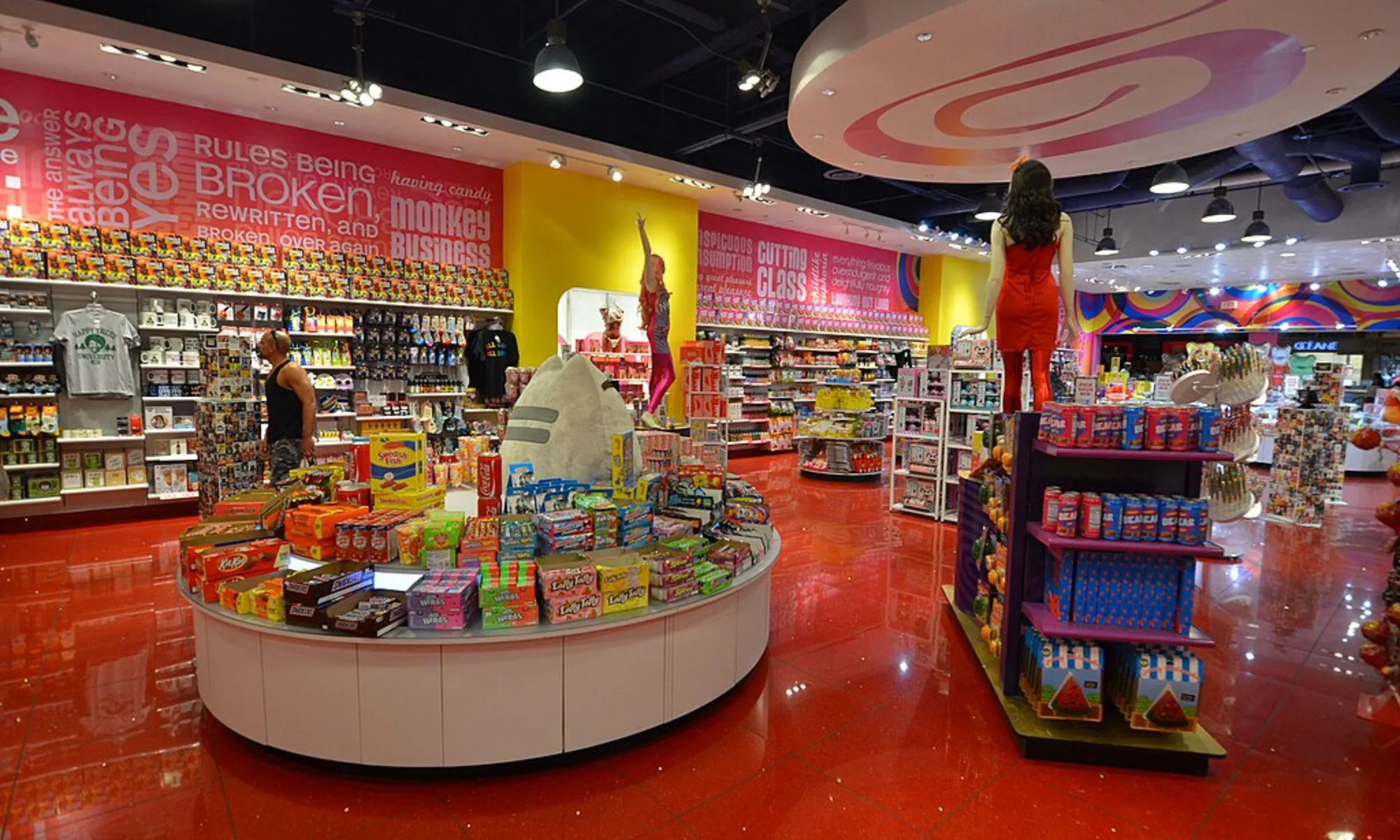
The 1970s and 1980s gave us some of the most memorable candy ever sold in the United States. Some were huge national hits. Others were shorter-lived products that built loyal followings and never really left people’s memories.
One thing a lot of nostalgia lists miss is that not every “lost” candy has the same ending. Some were fully discontinued. Some came back years later in altered form. Some still exist overseas under a related name. And some survive more as a rumor, a wrapper, or a collector memory than as a product you can actually buy.
That is part of what makes these candies so interesting now.
Quick Jump
- 1. PB Max
- 2. Bonkers
- 3. Marathon Bar
- 4. Reggie Bar
- 5. Choco Lite
- 6. Oompas
- 7. Freshen Up Gum
- 8. Astro Pops
- 9. Certs
- 10. Garbage Can-dy
- 11. Seven Up Bar
- Why these candies disappeared
- Can they come back?
- FAQ
1. PB Max
PB Max has one of the strangest reputations of any discontinued candy bar.
It was a peanut butter, oat, and milk chocolate bar introduced by Mars in 1989 and discontinued in 1994. The most famous explanation is that members of the Mars family did not like peanut butter, even though the bar reportedly sold well. That story has been repeated for years and appears in multiple secondary sources, but it is still best treated as a reported explanation rather than a clean official public statement from Mars.
Why people still miss it:
- it had a very different texture from a standard peanut butter cup
- it built a loyal fan base fast
- the reason for its disappearance feels unusually arbitrary
2. Bonkers
Bonkers were fruit chews with a soft outside and a stronger fruit-filled center.
They were heavily tied to 1980s advertising energy, especially the famous commercials where giant fruit “bonked” people on the head. That branding helped the candy stick in people’s memories.
A point many older articles miss is that Bonkers was revived by Leaf Brands in 2018. So the more accurate story is not that it vanished forever, but that the original version disappeared and later came back in revival form. Some fans say the newer version is close, while others say it is not the same candy they remember.
Why people still miss it:
- strong fruit flavor
- unusual filled-chew texture
- one of the most memorable candy ad campaigns of the decade
3. Marathon Bar
The Marathon Bar stood out because it looked enormous.
It was a long, braided caramel bar covered in chocolate, and the wrapper even included a ruler so you could see how long it was supposed to be. It felt bigger and more playful than a standard candy bar.
One useful detail many people miss is that the American Marathon Bar was closely related to Cadbury’s Curly Wurly in the UK. It is not exactly the same modern product in every respect, but it is the closest surviving relative and the reason so many nostalgic fans still talk about imports.
Why people still miss it:
- memorable size and shape
- slower, chewier eating experience
- one of the easiest discontinued candies to compare with a still-existing cousin product
4. Reggie Bar
The Reggie Bar was tied directly to baseball star Reggie Jackson.
That alone made it stand out. It was one of those products that felt like a full pop-culture moment rather than just another candy launch. When fans threw Reggie Bars onto the field during Jackson’s return to Yankee Stadium, the candy became part of sports history.
Like many celebrity-linked products, it was tied to a specific moment. Once that moment passed, the product did too.
Why people still miss it:
- unusual sports tie-in
- strong late-70s cultural identity
- one of the rare candy bars tied to a real public event people still remember
5. Choco Lite
Choco Lite is remembered mostly for texture.
It had an airy, light interior that made it feel different from heavier chocolate bars. For people who loved it, that melt-in-your-mouth feel was the whole point.
This is a good example of a candy that is still remembered more for how it felt to eat than for branding or advertising.
Why people still miss it:
- distinctive airy texture
- felt lighter than most candy bars
- easy to remember even if fewer people remember the ads
6. Oompas
Oompas were small peanut butter and chocolate candies sold under the Willy Wonka brand.
They are often described as a kind of early peanut-butter candy piece product, though they had their own texture and packaging style. The tube format helped make them feel portable and a little more playful than a standard bagged candy.
Why people still miss it:
- strong peanut butter and chocolate combination
- Wonka branding added to the memory
- one of those small-format candies people remember as a habit, not just a treat
7. Freshen Up Gum
Freshen Up is the outlier on this list.
It started in 1975, but unlike many 70s and 80s products, it lasted all the way to 2019. That makes it less of a short-lived retro candy and more of a long-running product that many 80s kids happened to grow up with.
What made it memorable was the liquid center. Biting into it felt different from normal gum, and that “burst” is the main reason people still talk about it.
Why people still miss it:
- liquid-center gimmick actually felt fun
- strong flavor memory
- lasted long enough to belong to multiple generations
Freshen-Up gum
Liquid-center chewing gum famous for the slogan "the gum that goes squirt."
8. Astro Pops
Astro Pops are another candy that needs a more careful update than most articles give.
The original product was discontinued by Spangler in 2004, but the brand was purchased in 2010 and later revived under Leaf Brands. That means Astro Pops is not just a lost candy of the past. It is also a revival story.
What people usually miss is not just the candy but the original form and feel of it, especially the rocket shape and layered look that made it feel so tied to its era.
Why people still miss it:
- unforgettable rocket shape
- layered flavor experience
- one of the clearest examples of a retro brand that came back in altered form
9. Certs
Certs was not exactly a candy bar, but it fits the broader nostalgia category because people remember it like one.
It stood out because of its distinctive flavor profile and the “Retsyn” identity that made it feel more specific than a generic mint. Certs was discontinued in 2018, and one widely cited explanation is that partially hydrogenated oil in the formula made the product harder to keep viable in a changing ingredient environment.
Why people still miss it:
- stronger identity than a normal mint
- unusual taste memory
- one of those products people remember from cars, purses, and checkout lanes as much as from candy aisles
10. Garbage Can-dy
Garbage Can-dy was deeply tied to the 1980s gross-out aesthetic.
The small plastic trash-can container and sour powder format made it feel like part candy, part toy, part joke. That mix was perfect for the Garbage Pail Kids era.
This is one of those products where the packaging may be remembered even more strongly than the candy itself.
Why people still miss it:
- classic 80s gross-out branding
- toy-like container
- nostalgia tied to a wider pop-culture craze
11. Seven Up Bar
The Seven Up Bar is one of the most ambitious candy concepts ever sold.
It had seven separate sections, each with a different filling. That made it feel like a sampler box turned into a single candy bar. It also made it more complicated than most bars on the shelf.
A lot of websites confidently say it was discontinued because it was too expensive to make. That may be part of the story, but the public sourcing around the exact reason is weaker and more contradictory than many articles admit. The safest version is that it was a complex product from another era, and complicated products are often the hardest to keep around.
Why people still miss it:
- seven flavors in one bar
- felt playful and unusual
- a good example of how much more experimental candy design could be
Why these candies disappeared
Most discontinued candy stories come down to a few recurring themes.
Some were too complicated to keep making.
Some were tied to a trend, celebrity, or moment that ended.
Some were bought, sold, or deprioritized by larger companies.
Some survived only in altered form or in another country.
And some built loyal fans without ever becoming big enough to stay permanent.
That last point matters.
A candy does not need to be a failure to disappear. It only has to become less useful to the company than the shelf space and manufacturing effort it requires.
Can they come back?
Sometimes, yes.
That is another thing nostalgia articles often oversimplify. Bonkers came back. Astro Pops came back. Marathon’s closest living relative still exists in the UK. Some products survive through revival brands, overseas equivalents, or limited specialty runs.
That means the better question is not always “Is it dead forever?”
Sometimes the better question is:
- did the original version disappear?
- is there a revival?
- is there a close substitute?
- or is it only the memory people want back?
Modern Alternatives
| Discontinued Candy | Closest Modern Alternative |
|---|---|
| PB Max | Reese’s Fast Break or Nutrageous |
| Marathon Bar | Curly Wurly (UK import) |
| Bonkers | Current Bonkers revival or Hi-Chew |
| Freshen Up Gum | No exact match; liquid-center gum is still hard to replace |
| Oompas | Reese’s Pieces |
Frequently Asked Questions
Why was PB Max discontinued if people liked it?
The most widely repeated explanation is that the Mars family disliked peanut butter, but that should be treated as a reported explanation rather than a fully settled official statement.
Can I still buy Marathon Bars?
Not the original U.S. Marathon Bar, but Curly Wurly in the UK is the closest surviving relative.
Are any of these candies still around?
Yes, in some form. Bonkers and Astro Pops both had revival runs, and Curly Wurly remains available in the UK.
Why do discontinued candies feel so memorable?
Because people remember more than the taste. They remember the wrapper, the ad, the store, the era, and the feeling of finding that candy at the right age.
Where can I find old wrappers or candy packaging?
Mostly on resale and collector sites. For most discontinued candy, the packaging is easier to find than fresh product.