What Really Happened to Circuit City? The Firing That Doomed Them
In 2007 Circuit City fired 3,400 top salespeople. Service crashed, shoppers fled to Best Buy, and bankruptcy hit 18 months later.

By Vanished Brands Research Desk
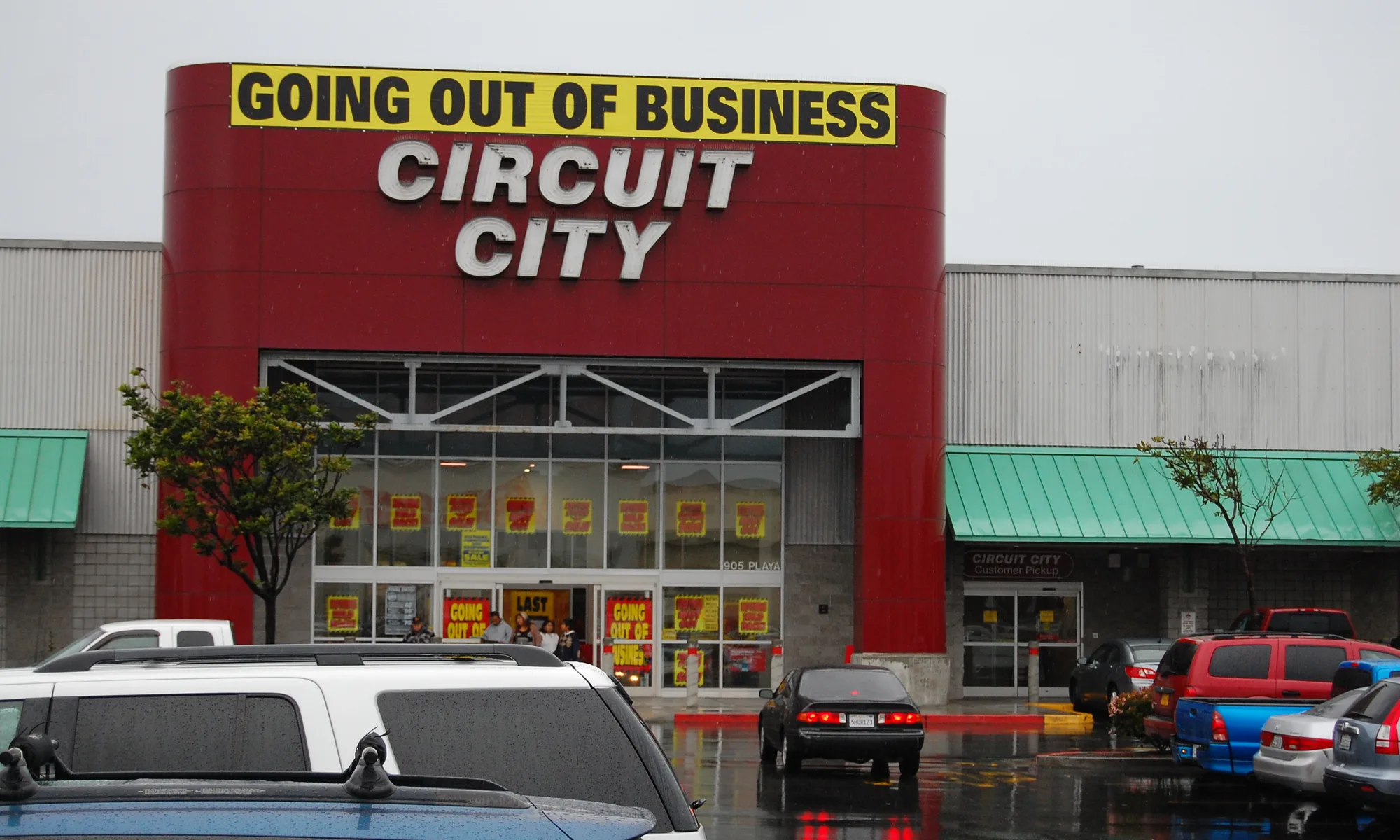
The setup
In the early 2000s, Circuit City wasn’t struggling — it was winning. The company was beating competitor Best Buy in sales, had strong brand recognition, and was considered one of the most successful electronics retailers in the country. If you walked into a mall or shopping center, Circuit City felt like the place to buy a TV, a stereo, or a new computer. Best Buy was the challenger, not the champion.
And then Circuit City made a decision that would unravel everything.
The turning point
In March 2007, Circuit City fired 3,400 of its highest‑paid, most experienced salespeople. These employees actually knew the products, could explain the differences between models, and helped customers feel confident about big purchases. Management replaced them with minimum‑wage workers who had little training and no product expertise.
The CEO framed it as a cost‑cutting move — the company expected to save $110 million. But the savings came at a massive hidden cost: customer trust.
Overnight, shoppers walked into stores and found no one who could answer basic questions. Confusion replaced confidence. And customers quietly drifted to Best Buy, where knowledgeable staff were still part of the experience.
The clues that something was wrong
Internal emails later showed that executives knew the move was risky. They understood they were removing the very people who made the stores work. But leadership also believed salespeople were interchangeable — that anyone could sell electronics with the same results.
They were wrong.
The loss of expertise created a domino effect:
- Service quality dropped
- Customer frustration rose
- Sales fell
- Best Buy gained even more ground
And this wasn’t the only misstep. Circuit City had already alienated customers with earlier decisions: pushing DIVX, a failed proprietary DVD format; refusing to match online prices; and running a clunky website while Best Buy invested heavily in e‑commerce.
[bold category header] The breakdown
Circuit City didn’t collapse because of one bad quarter or a sudden shift in the market. It collaps